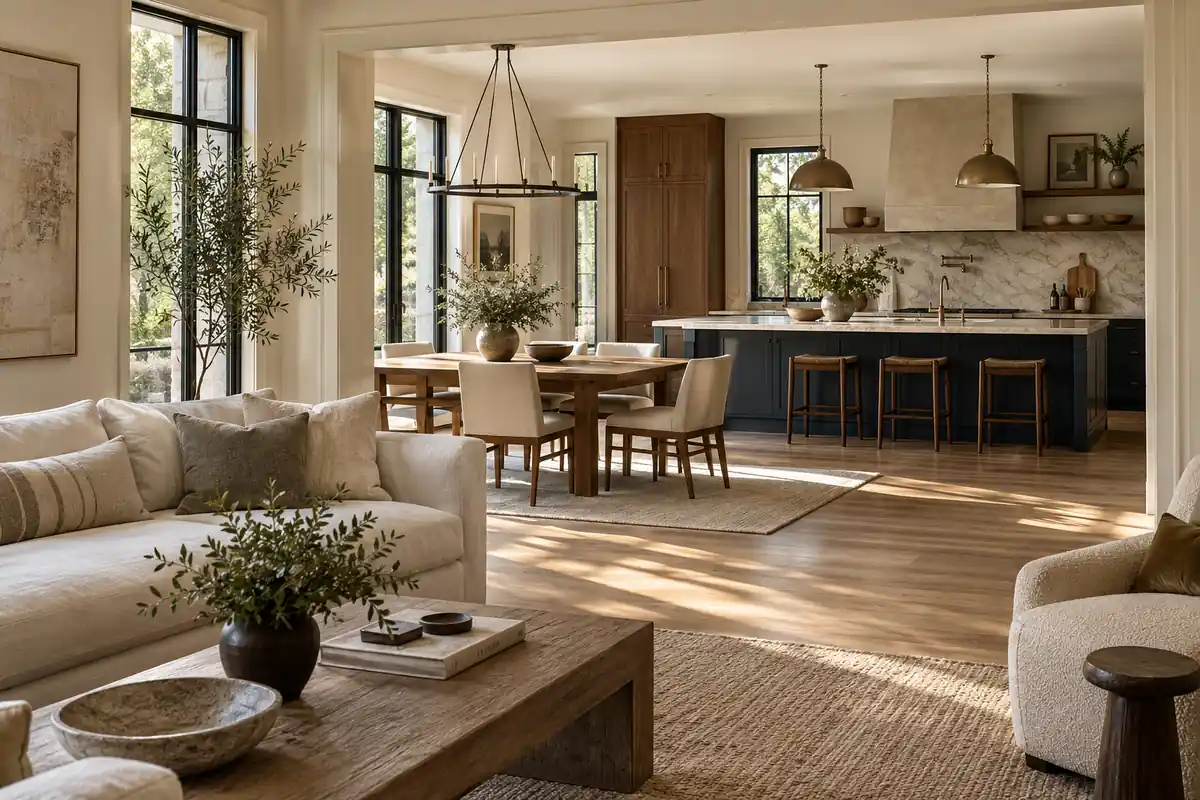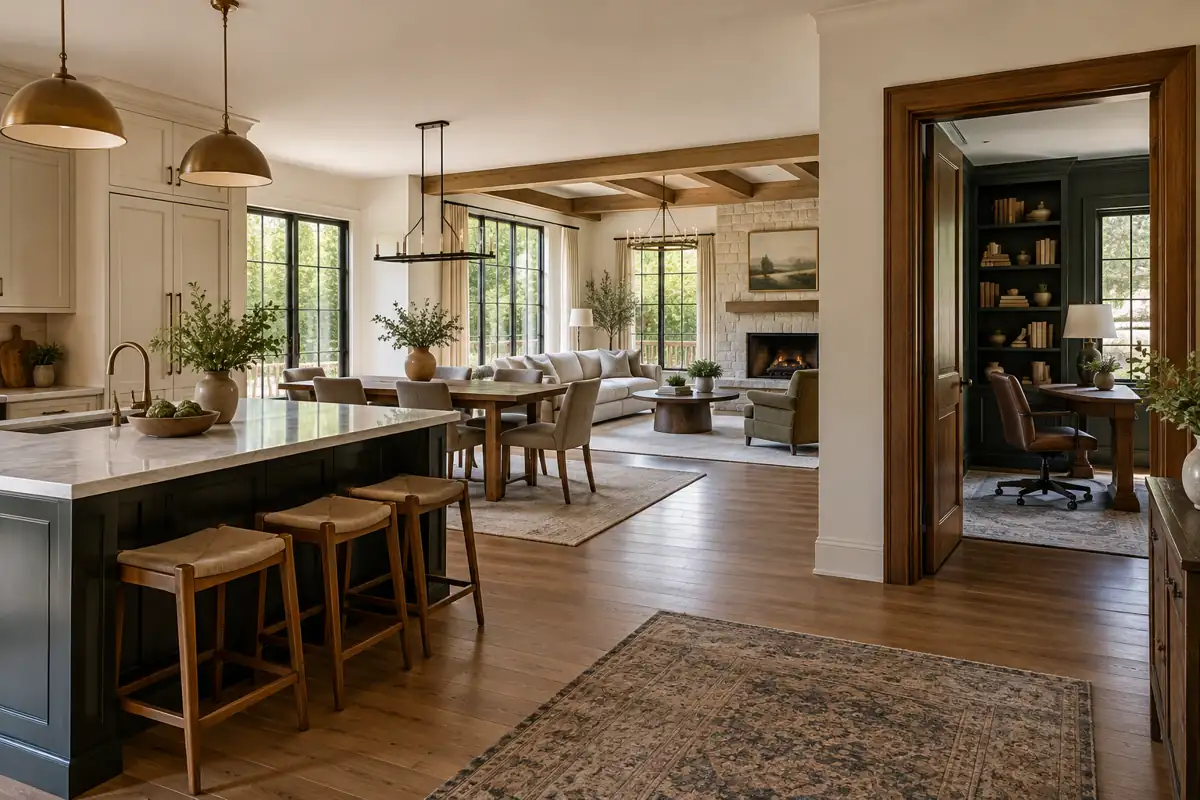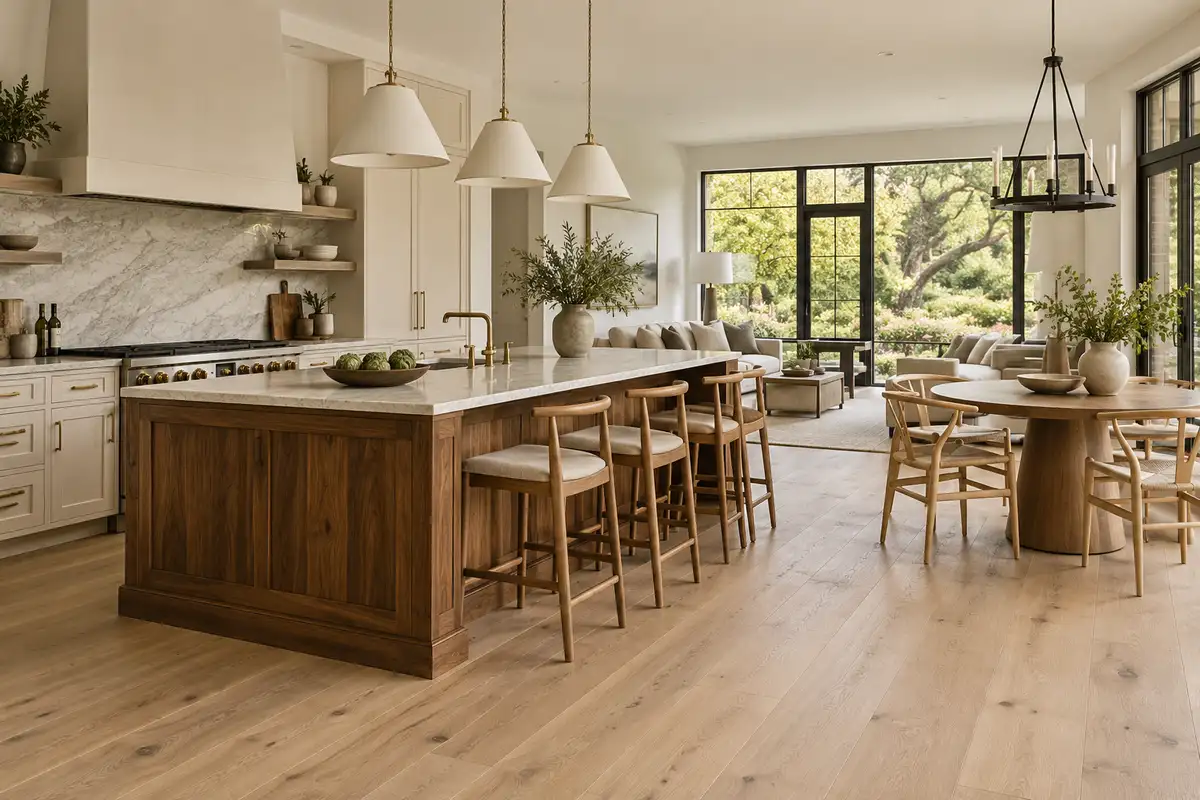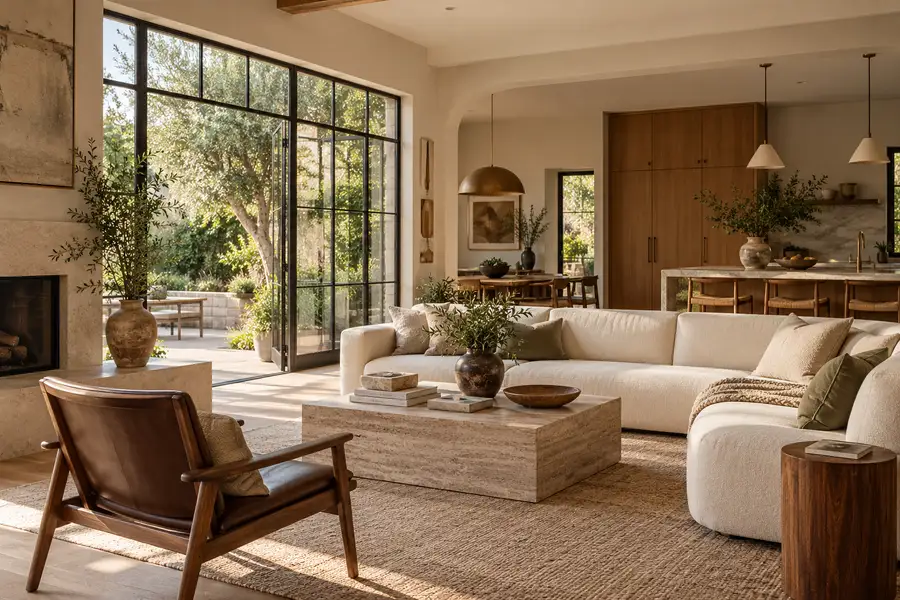


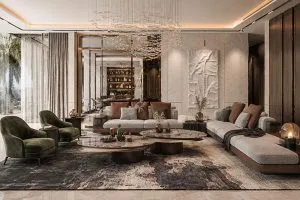


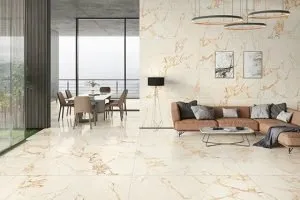
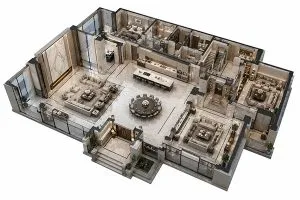



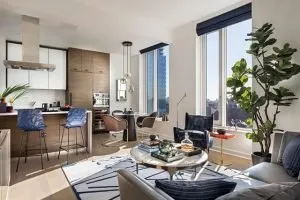





A living room needs to work when someone is reading, the family is watching a movie, and friends arrive with nowhere to put a drink. The best modern luxury living room designs bring those ordinary moments together through a thoughtful layout, comfortable furniture, and materials that feel connected.
These eight ideas cover furniture proportions, color, materials, lighting, storage, window treatments, and personal details. We explain how to adapt each choice to your home or apartment, including the practical trade-offs to consider before ordering.
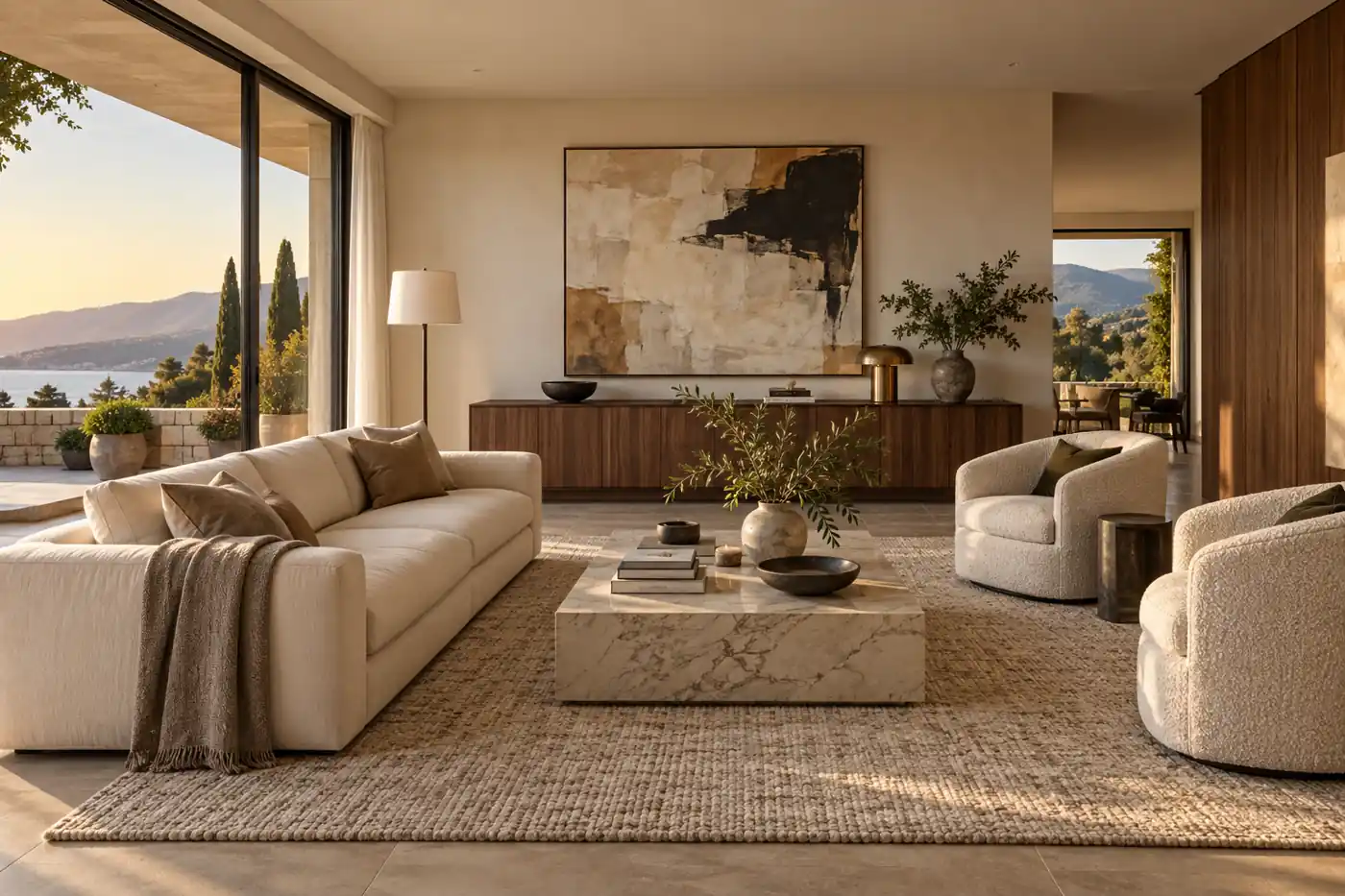
Table of Contents
What Makes a Living Room Feel Modern and Luxurious
Modern luxury comes from proportion, comfort, and coordination. A smaller room with well-chosen seating and useful storage can feel more considered than a large room filled with expensive objects.
Start with a clear furniture arrangement, then repeat a few materials across the space. Give reading, conversation, and evening relaxation their own lighting options.
Plan a home for remotes, blankets, books, and charging cables so they do not take over every surface. Finally, keep the pieces that mean something to you. A room should reflect its residents rather than look like an untouched showroom.
1. Start With a Layout That Fits How You Live
Choose the room’s main use before choosing its largest furniture. A television room, a conversation room, and a family play space need different seating relationships.
Mark entrances and the paths to the kitchen, hallway, and terrace on a measured plan. In an open living-dining area, a sofa and rug can define the lounge without adding a partition. In a narrow apartment, protect the route through the room before adding a chaise. In a large room, bring seats into a comfortable group rather than spreading them around the perimeter.
Houzz’s living room layout guide likewise starts with how the room will be used. Our practical starting points are:
| Main need | Layout direction |
|---|---|
| Watching television | Face primary seats toward the screen; check window glare. |
| Hosting friends | Group the sofa and chairs for easy conversation. |
| Open living-dining space | Use furniture direction and a rug to define the lounge. |
| Several doors | Reserve the main walking routes before sizing furniture. |
2. Get the Sofa, Rug, and Coffee Table Proportions Right
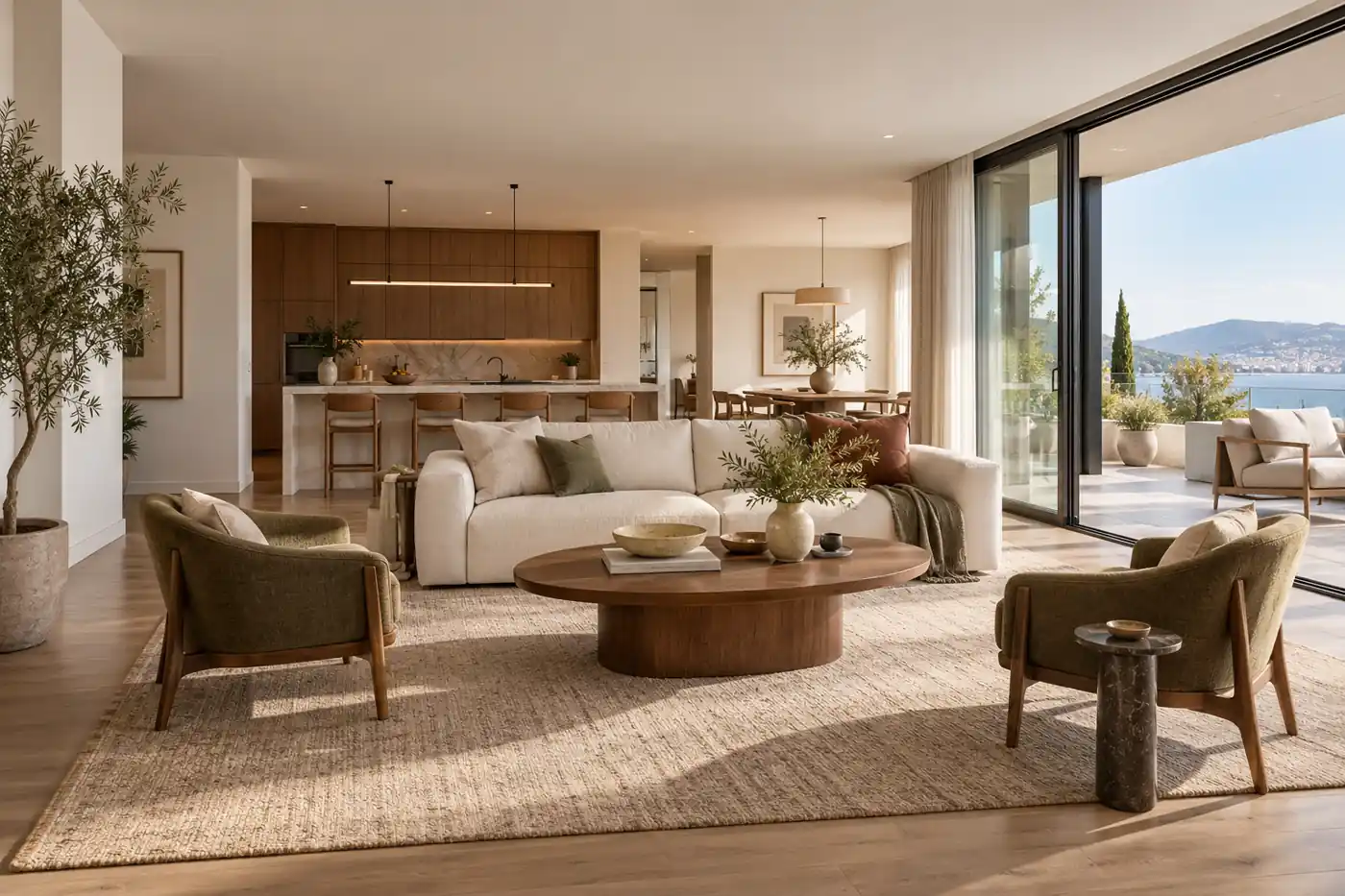
Choose the seating group as a whole, rather than buying a sofa and fitting everything else around it. The sofa, chairs, rug, and tables should support the same activities without crowding the room.
A sectional can suit a family that lounges together, but its return may block a doorway or fix the room into one arrangement. A sofa with accent chairs often offers more flexibility for conversation and future changes. Compare their complete footprints, including recliners or pull-out mechanisms in use.
Relate the rug to the full seating group. A tiny rug under only the coffee table can leave the chairs visually disconnected. Choose a table that allows people to reach a drink while leaving enough room to stand and pass comfortably.
Before ordering living room furniture, mark its outline with tape. Check the delivery route through elevators, stairs, and doorways too. Test seat depth, back support, and getting up: a low, oversized sofa may photograph beautifully but feel awkward for the people using it.
3. Build a Cohesive Color Palette With Depth
Use a restrained palette with a clear base, supporting wood tone, and a small amount of contrast. Modern luxury living room ideas do not have to mean an entirely beige room.
These are our editorial combinations, not ranked trends:
| Direction | Palette |
|---|---|
| Warm modern | Warm white, pale oak, soft brown |
| Quiet contrast | Ivory, walnut, touches of charcoal |
| Expressive modern | Neutral walls, deep green or blue, restrained metal accents |
Distribute the accent through a chair, artwork, or a few cushions rather than giving every surface equal intensity. Put wall, flooring, cabinet, and fabric samples together in the actual room.
Compare them in daylight and under evening lamps; similar neutrals can reveal different undertones. If you are keeping a patterned rug or favorite painting, use it as the starting point instead of forcing it into a new scheme.
4. Mix Refined Materials With Everyday Comfort
Combine materials with different textures, then decide which one should lead. Wood can warm the cabinetry, stone can give a coffee table presence, and woven upholstery can soften the seating group.
A strongly veined stone works well as a focused feature. Repeating it across the floor, wall, and tables can overwhelm a modest room. Compare natural stone and stone-look products by appearance, intended use, edge details, and maintenance requirements—not price alone. Ask for the specific care instructions before making the final choice.
Choose upholstery for touch and daily use as well as color. If children eat on the sofa or a pet claims the armchair, review cleaning methods, removable covers, and replacement options. “Performance fabric” is not a promise of stain-proof or maintenance-free furniture; check the actual product information.
We suggest testing the material combination with real samples. A glossy table, shiny metal, and smooth leather may need a textured rug or softer curtains to keep the room welcoming. Restraint makes each material easier to appreciate.
5. Layer Lighting for Conversation, Reading, and Relaxing
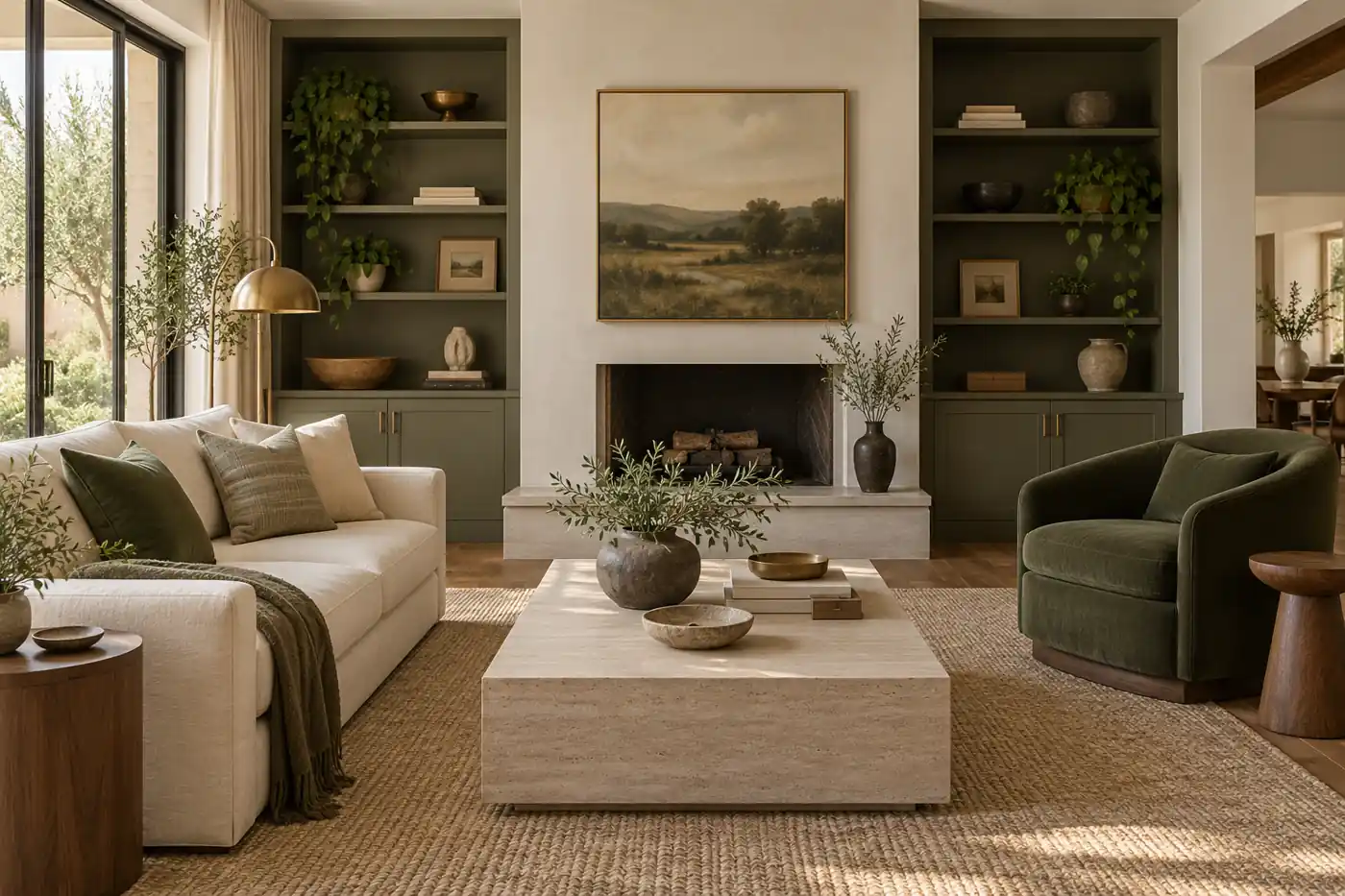
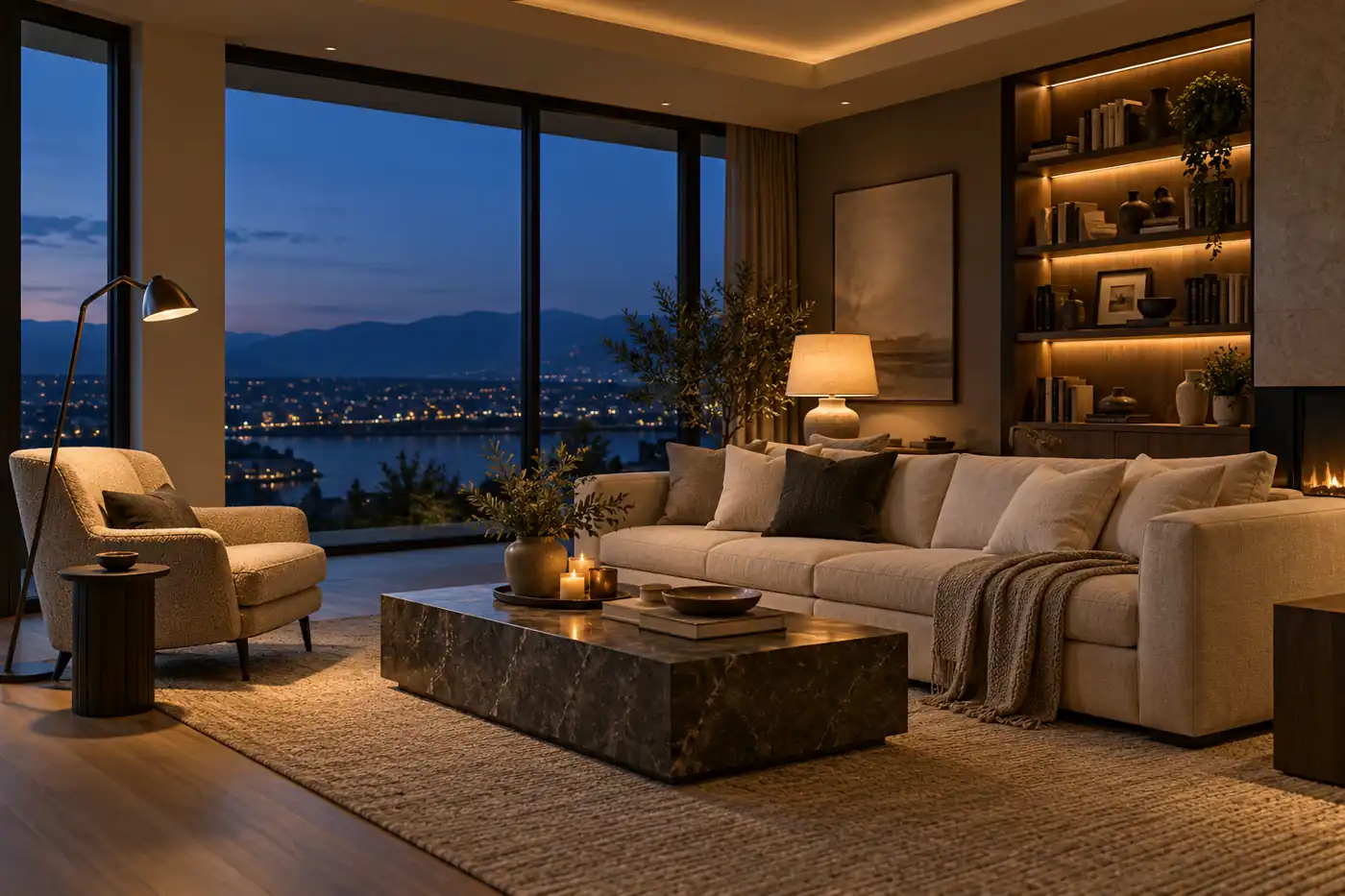
Plan lighting around activities, using several controllable sources instead of expecting one chandelier to do everything. Good living room lighting lets the room change as the evening unfolds.
Provide general light for moving around and everyday tasks. Add a reading lamp beside the seat where someone actually reads. Table lamps, wall lights, and subtle shelf lighting can create a quieter setting for conversation. When watching television, adjust lights that reflect in the screen or shine directly into viewers’ eyes.
A decorative pendant can be a focal point, but choose its scale and position around ceiling height and the furniture below. A dramatic fixture is optional; balanced light is more useful than sheer size.
Coordinate lighting selections, outlets, and controls early. Keep floor-lamp cords out of walking routes, and check dimmer compatibility with the specified fixtures. Test the planned scenes from the sofa and reading chair. Exact installation details should follow the products and your project’s electrical requirements.
6. Integrate the TV, Fireplace, and Storage Into One Design
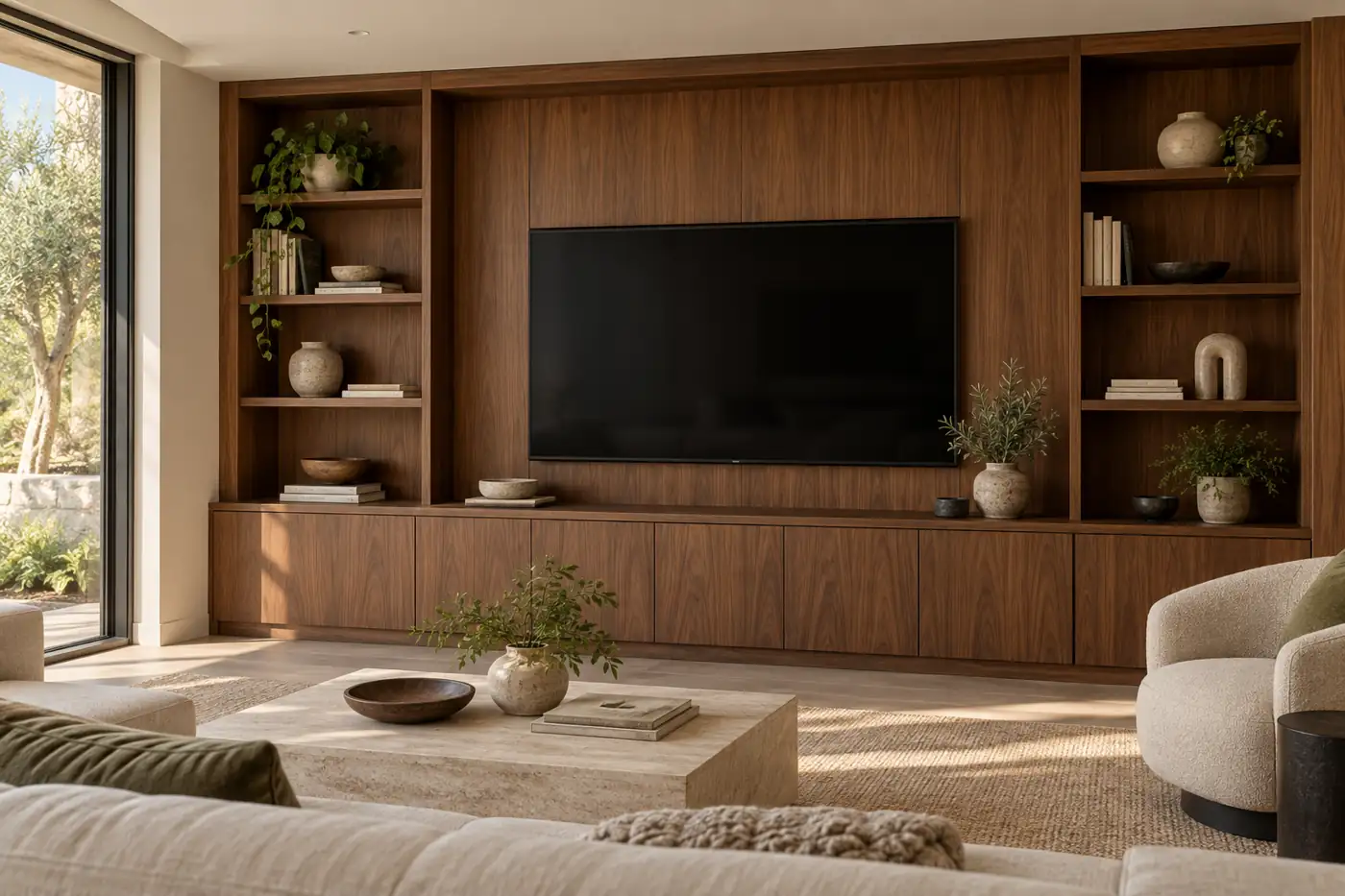
Plan the focal wall around comfortable viewing and useful storage before choosing decorative cladding. The television, fireplace, and artwork do not all need to compete in the same place.
Check the screen from the main seats, considering viewing angle and reflections from windows. If you want a television above a fireplace, confirm both manufacturers’ installation requirements and the seated viewing experience before committing. Another wall or a separate art position may produce a more comfortable arrangement.
Use custom living room cabinetry to combine closed storage with a limited amount of display. List what it must hold: games, blankets, books, media devices, and charging equipment. Size compartments for those belongings rather than relying on a symmetrical drawing alone.
Resolve wiring, outlets, equipment ventilation, and service access before fabrication. Leave a practical way to reach connections without dismantling the whole wall. In a small living room, avoid unnecessarily deep cabinets that take space away from seating and circulation. A shallow, well-organized unit may serve the room better than an elaborate full-depth feature wall.
7. Frame the View With Practical Window Treatments
Choose window treatments that balance daylight, privacy, and screen glare. Large windows are an asset, but an attractive daytime view does not remove the need for privacy after dark.
Depending on the room, sheers and a separate privacy layer can offer flexibility, while a simpler shade may suit tighter spaces. Compare fabric color with the walls, upholstery, and window frames instead of treating curtains as an isolated purchase.
Check where curtains stack when open. They should not obstruct a door swing, terrace route, or the chair beside the window. Think about reaching controls, cleaning the fabric, and opening the window too. Heavy drapery is not essential to a luxurious room; the right treatment should feel proportionate and be easy to use every day.
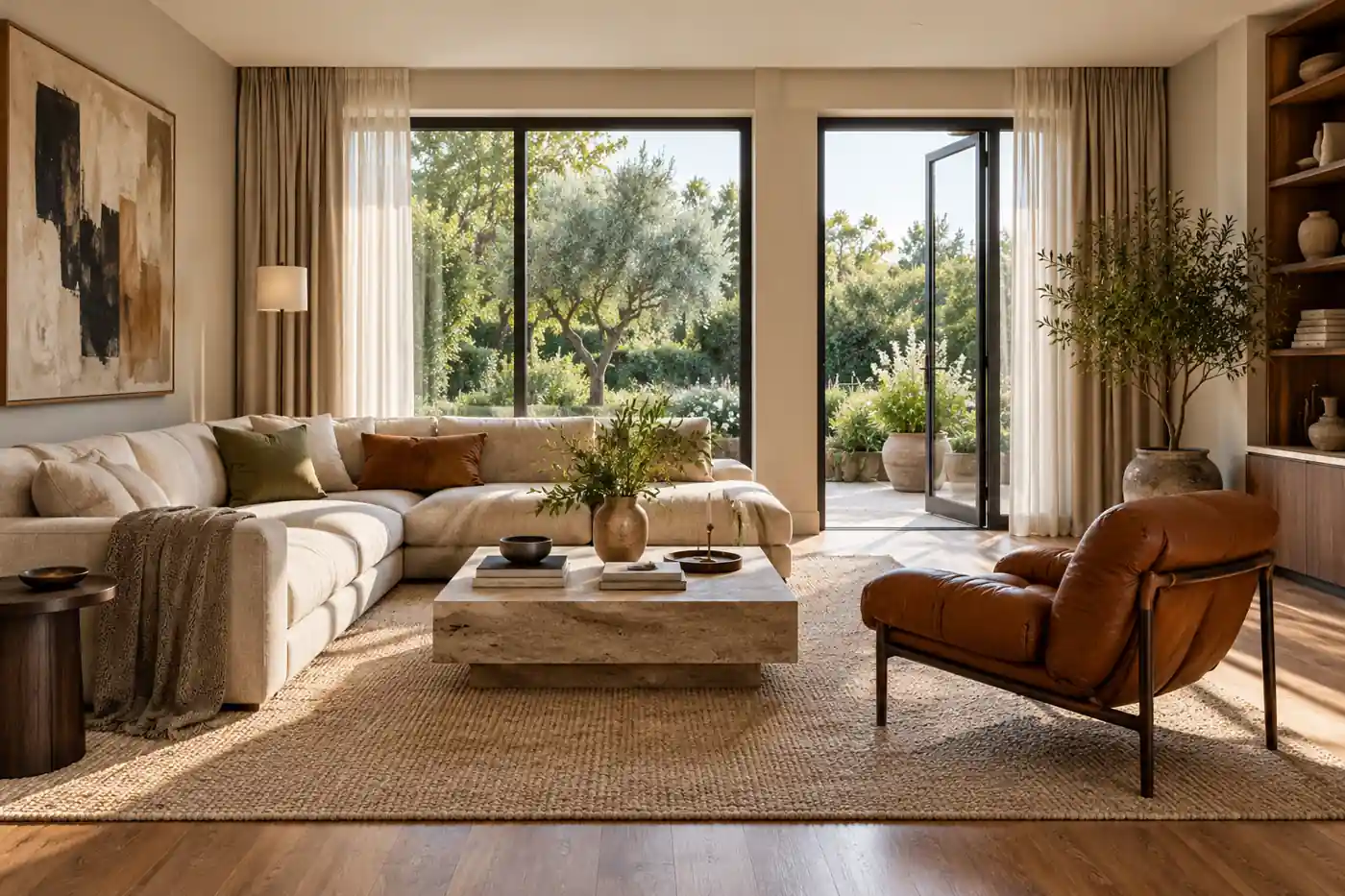
8. Add Personality With Art and a Few Distinctive Pieces
Give the room character through objects you enjoy, then leave enough empty space for them to be noticed. Art, books, collected ceramics, and one distinctive chair can bring more personality than a matching set of accessories.
A curved sofa or sculptural table can soften straight architecture, but every piece does not need the same shape. Check that unusual forms still leave useful seating and walking space.
Arrange artwork in relation to the furniture and view it from the seats, not just the doorway. Keep a clear place for a cup or laptop on everyday tables. Mixing a favorite older piece with new furnishings can make the room feel personal without sacrificing a coherent palette.
Common Mistakes That Make a Luxury Living Room Less Comfortable
Before approving your selections, review the room as a complete daily routine:
- Buying before measuring: check furniture footprints, doors, and delivery access.
- Unbalanced proportions: consider the rug, chairs, sofa, and tables together.
- Only overhead lighting: provide useful reading and evening options.
- Too many focal points: let one main feature lead each view.
- No place for everyday items: plan charging, cables, remotes, and closed storage.
- Choosing only from photographs: test sitting, viewing angles, surface care, and movement.
Walk through the arrangement with the household before ordering. Opening a cabinet or drawing a curtain should not require moving another piece of furniture.
FAQs About Modern Luxury Living Room Design
How can I make a small living room feel luxurious?
Prioritize furniture proportions, a clear walking route, and coordinated materials. Choose storage for the belongings you actually use, then add lighting at different heights. A smaller comfortable sofa and carefully positioned chairs may work better than an oversized sectional. White walls or mirrors alone will not resolve a crowded layout.
Should I choose a sectional or a sofa with accent chairs?
Choose according to room shape, regular seating needs, and how much flexibility you want. A sectional can support shared lounging and TV viewing. A sofa with chairs can make conversation and rearranging easier. Compare both layouts on a measured plan, including doorways and the space needed to move around occupied seats.
Can a modern luxury living room work for children and pets?
Yes. Select upholstery with clear care instructions, practical furniture forms, and storage for toys and pet supplies. Ask about removable covers and replaceable components where available. Check the specific material specifications rather than assuming a premium price means easy cleaning. A refined palette can still include furniture intended for everyday use.
Where should I spend more when furnishing a living room?
Start with the pieces and systems you use most: comfortable core seating, useful lighting, and well-planned storage. Then weigh the cost of changing built-in work later. Decorative accents can often develop over time. There is no universal budget split; the priorities depend on what already works and how your household uses the room.
Bring Your Living Room Together
Planning a living room that feels right for your home? Share your floor plan, the furniture you want to keep, and a few styles you love. We can help coordinate furniture, cabinetry, stone, lighting, and soft furnishings around your daily needs, from the first material samples to the final details.