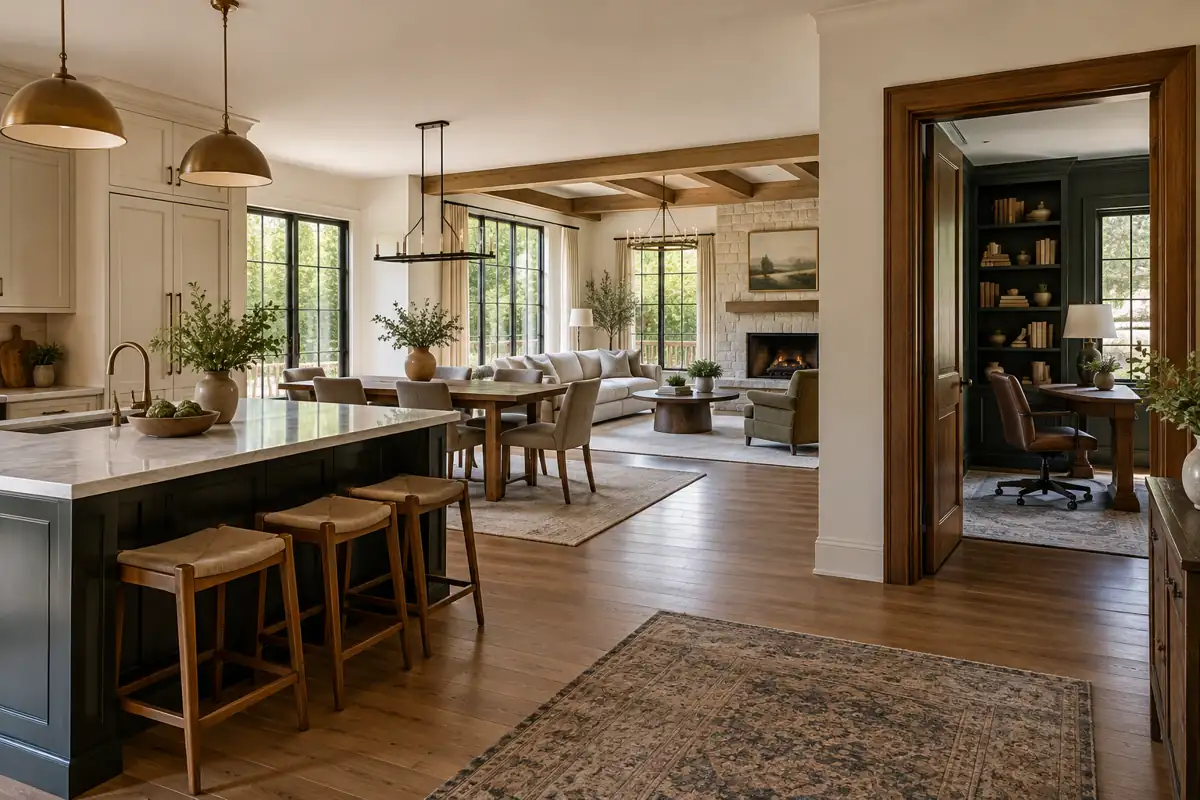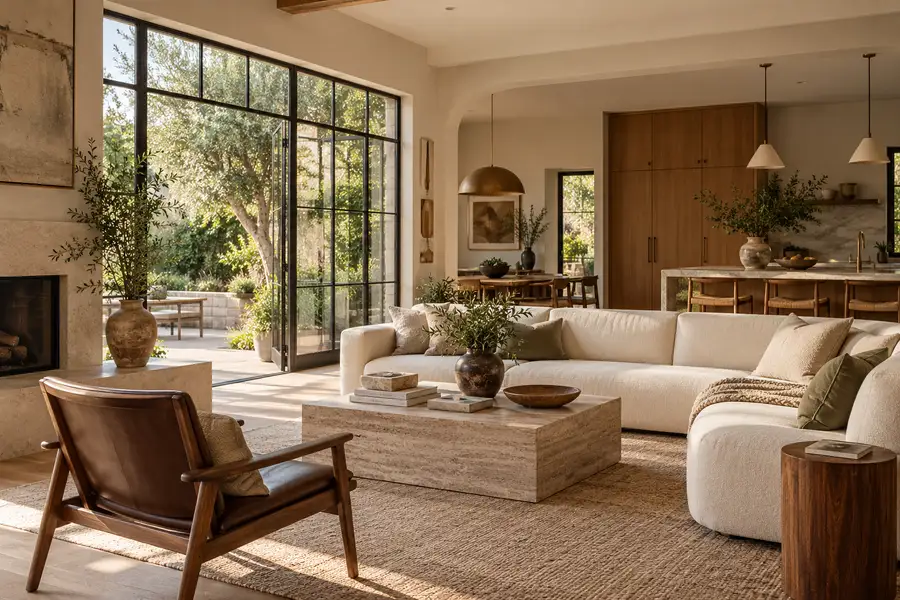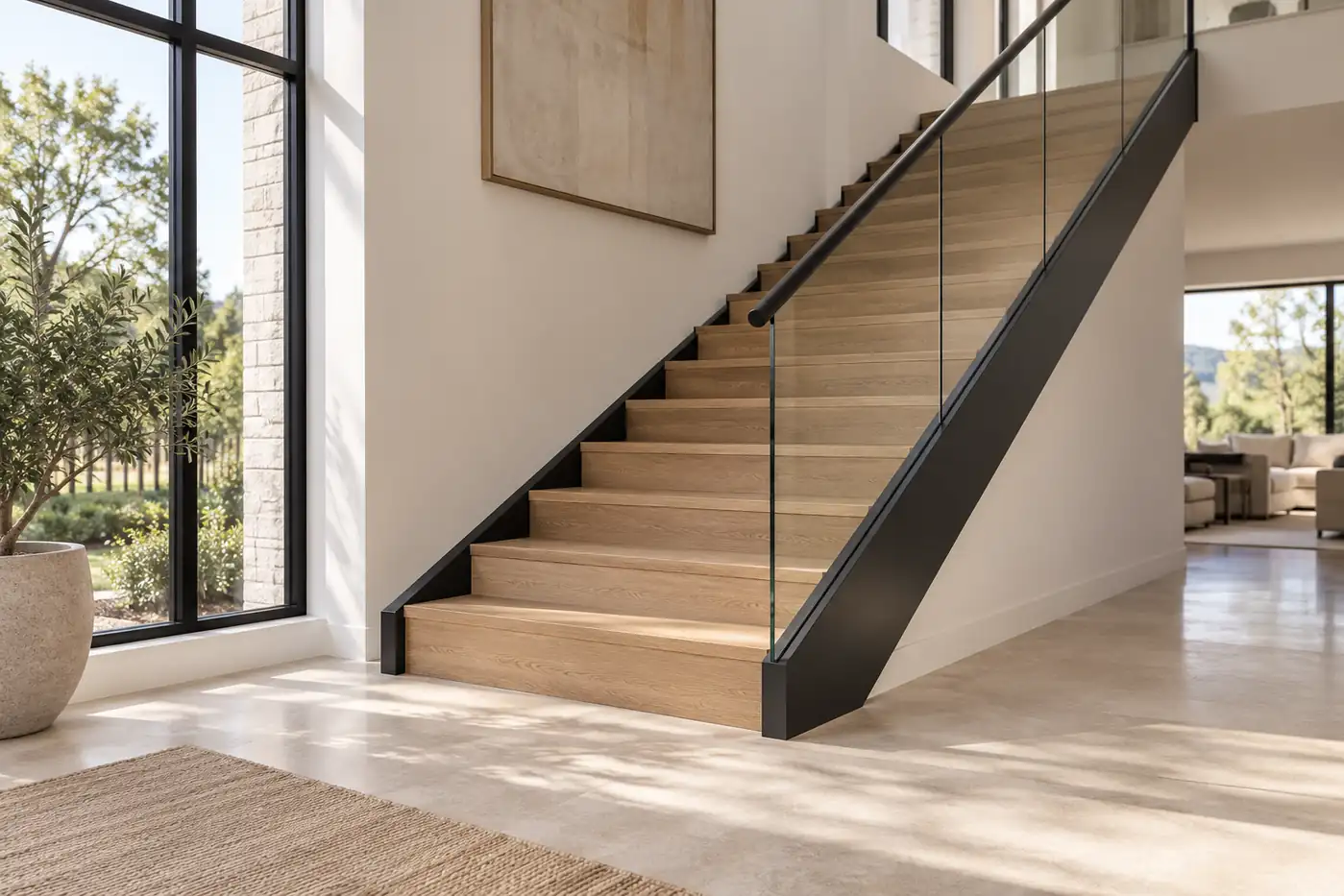
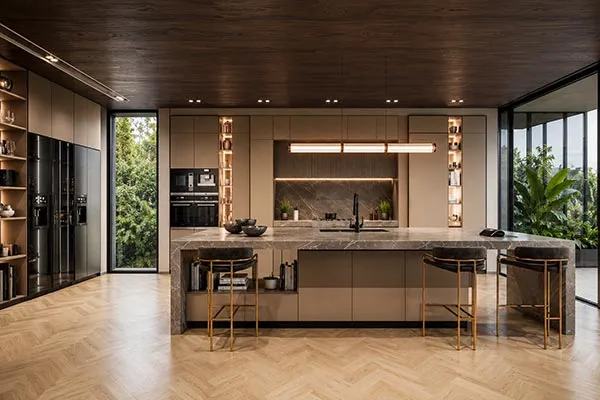











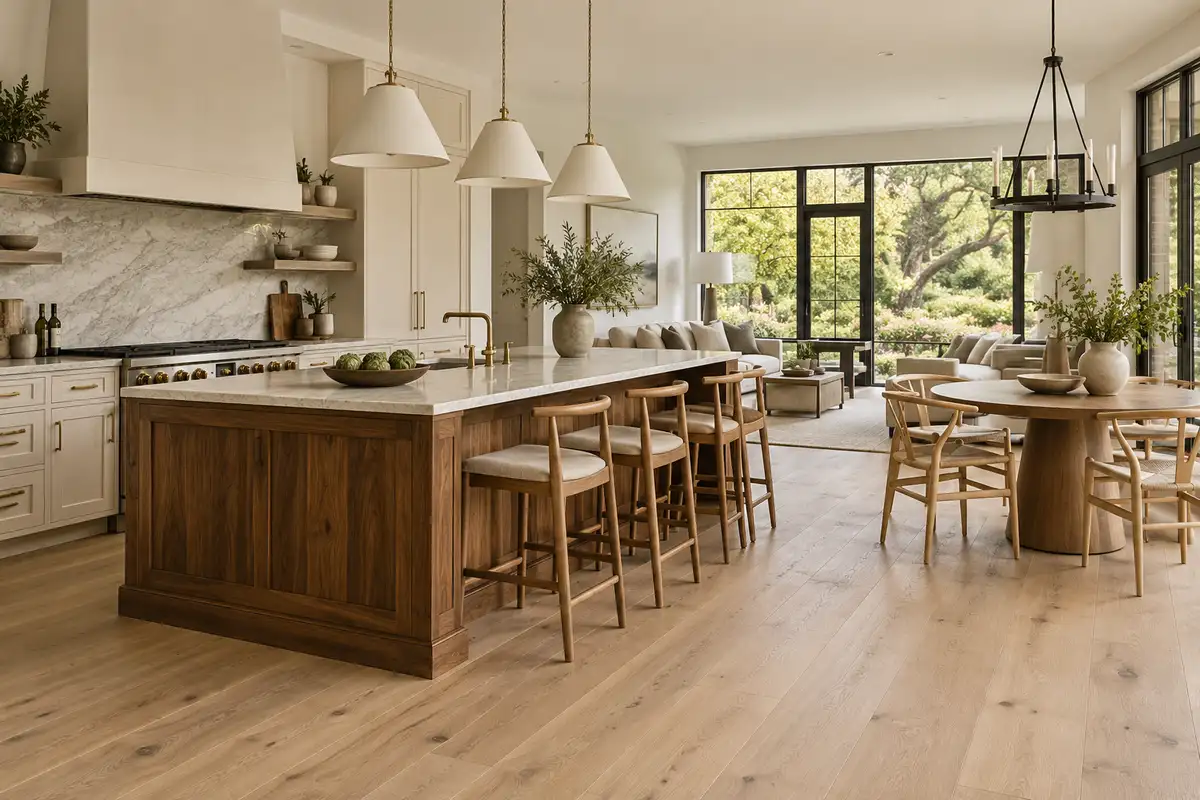
A wood sample can look perfect on its own and completely different beside your kitchen floor. That is why we start with the whole room: its daylight, existing finishes, and everyday use.
White oak offers a versatile warm foundation. Walnut brings rich brown contrast. Ash suits lighter interiors with expressive grain. The right choice depends on where you use it, not simply which photograph you like most.
The 2026 U.S. Houzz Kitchen Trends Study found that wood cabinet colors reached 29%, just ahead of white at 28%, among surveyed renovating homeowners. This supports the return to wood, without making one species the answer for every home.
Table of Contents
White Oak vs Walnut vs Ash at a Glance
Our comparison uses American white oak, American black walnut, and American ash. Confirm the actual species when ordering; a color called “walnut” may describe a stain rather than the underlying wood.
| Feature | White oak | Black walnut | American ash |
|---|---|---|---|
| Natural appearance | Whitish to brown; grain varies with cut | Brown heartwood with lighter sapwood | Pale sapwood; brown heartwood; strong grain contrast |
| Reference hardness | About 1,360 lbf | About 1,010 lbf | About 1,320 lbf |
| Design direction | Versatile, warm, understated | Rich, grounded, expressive | Bright, textured, Scandinavian |
| Specify carefully | Cut and color selection | Sapwood allowance and construction | Color range and grain contrast |
Hardness figures are approximate conversions from AHEC reference values. They help compare resistance to indentation, not the scratch resistance of a finished floor. Coating, construction, and care still matter.
Which Wood Fits Your Home and Lifestyle?
Before shortlisting, decide what stays. An existing floor, a stone fireplace, or a favorite dining table already gives the room a starting point. Take samples to those surfaces instead of selecting everything separately. For a new build, choose the largest wood surface first, then test the smaller pieces around it. This keeps the decision manageable.
White Oak: A Flexible Starting Point
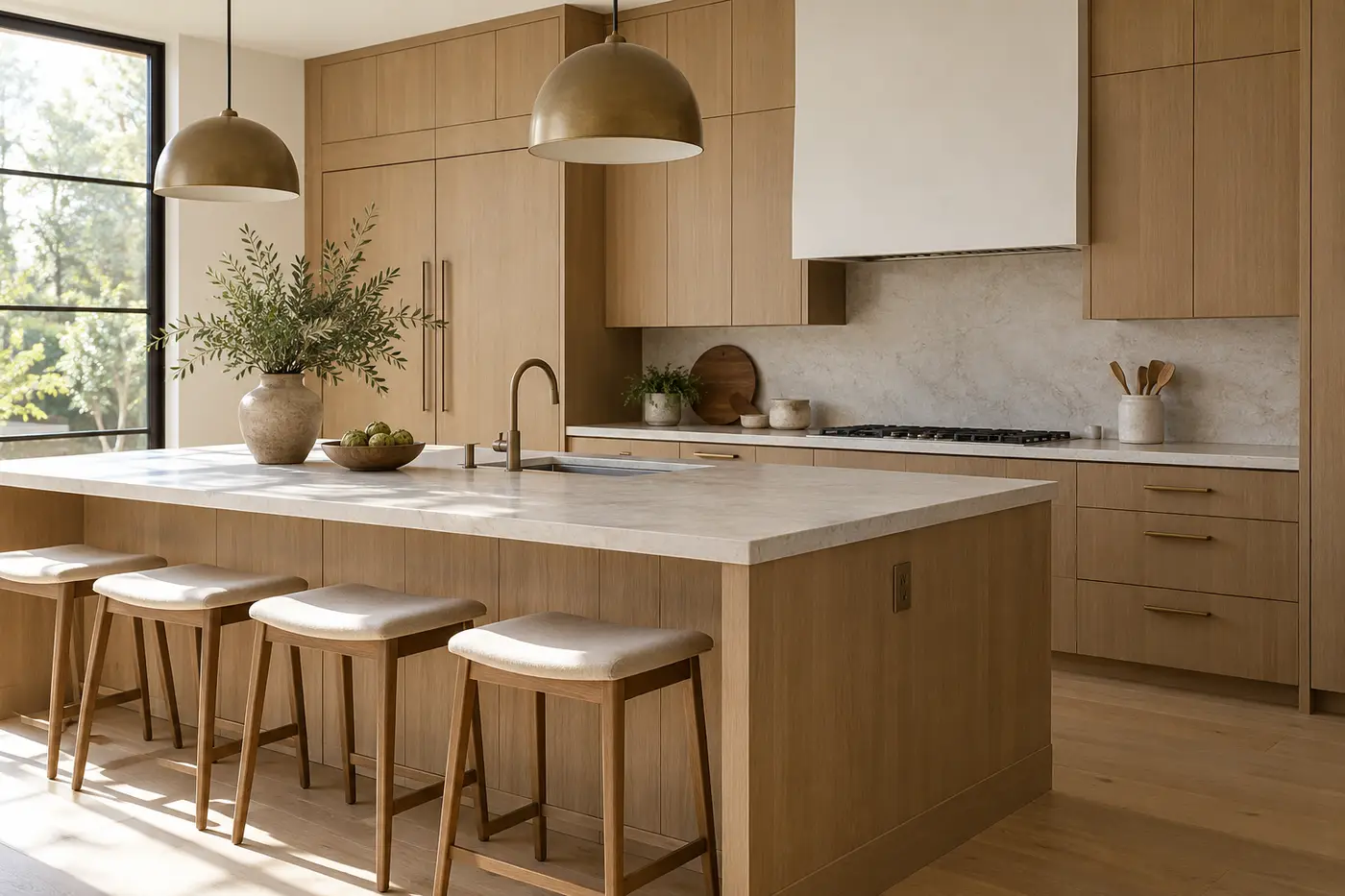
We would shortlist white oak when you want a warm base that can connect several rooms. It works with quiet stone, warm white walls, and both simple slab fronts and slim Shaker cabinets.
For a restrained kitchen, ask to see rift-cut samples alongside other cuts. Do not assume every white oak cabinet will have the same straight grain. Selection changes the character considerably.
For floors and stairs, compare the finished surface as carefully as the species. Busy households should consider furniture pads, entry mats, and the product’s maintenance instructions. Hard wood still needs sensible care.
Walnut: Rich Color Where It Counts
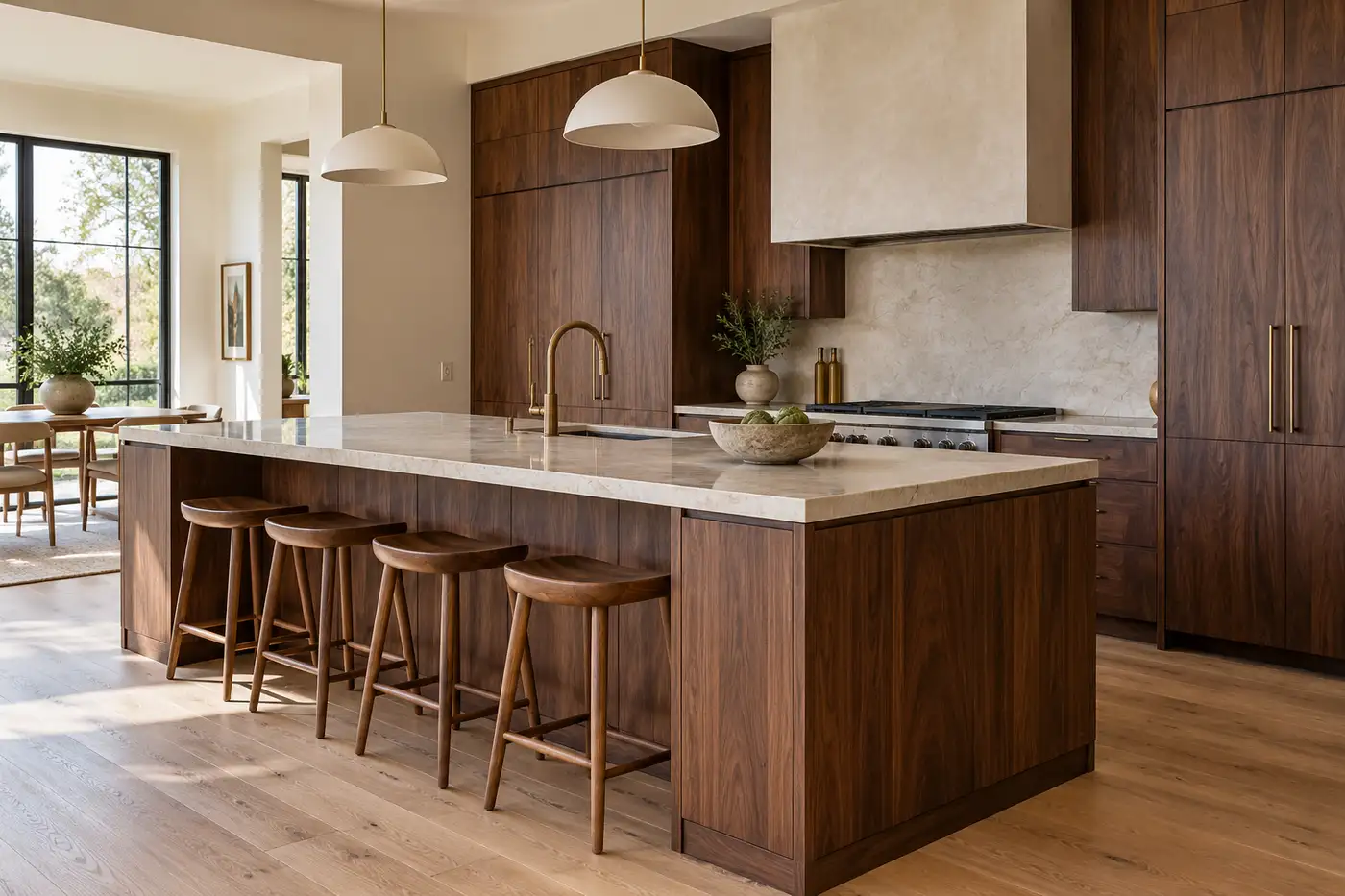
Walnut is a strong choice when the wood itself should be a focal point. Its brown heartwood can give an island, media cabinet, or dining area depth without an elaborate door profile.
In a room with limited daylight, we would test walnut on a smaller area first. A darker island beneath a light countertop can provide contrast while leaving the surrounding room bright.
Walnut can also be used for flooring. However, its lower reference hardness means buyers concerned about dents should weigh that tradeoff. A higher material price does not mean greater indentation resistance.
Ash: Light Color with Visible Character
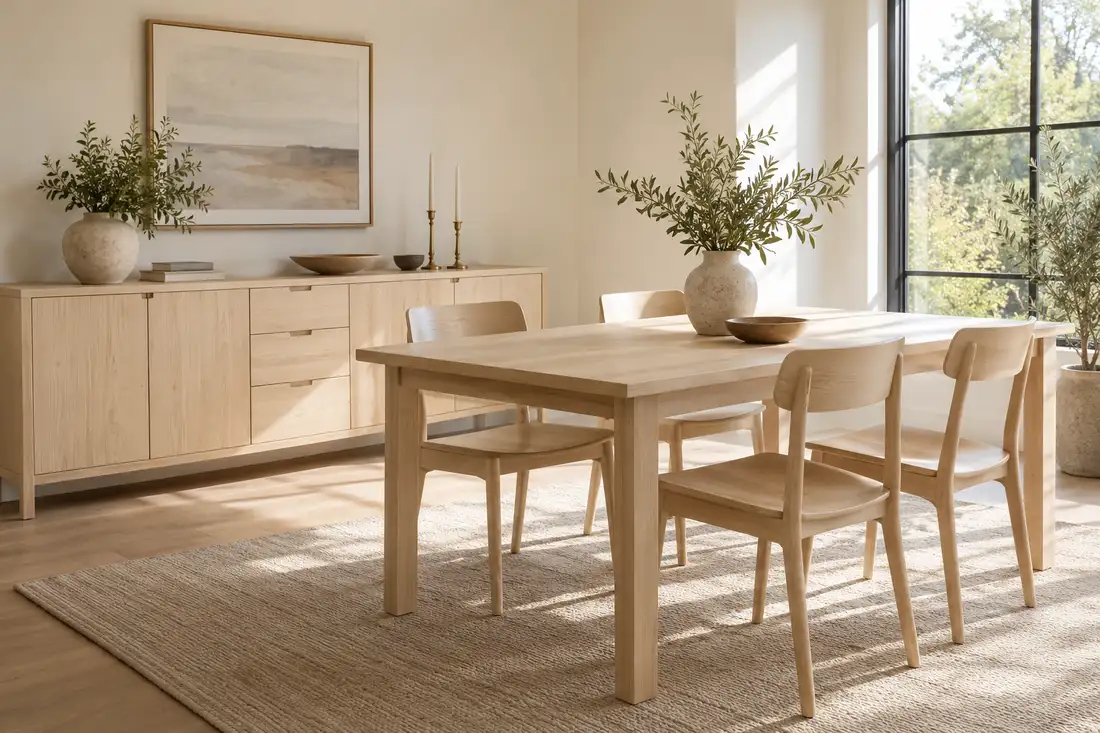
Ash deserves attention if you like pale Scandinavian interiors but want noticeable wood texture. Its generally straight grain can give a simple sideboard or wardrobe plenty of character.
Ask for a range of samples rather than one pale piece. American ash can include white-to-yellow sapwood and brown heartwood, so an evenly light appearance requires an agreed selection standard.
We would compare it with your upholstery and wall color before deciding. A softly finished ash surface beside cream linen feels different from the same wood under a darker stain. Neither look is guaranteed by the species name alone.
Why the Same Wood Can Look Different
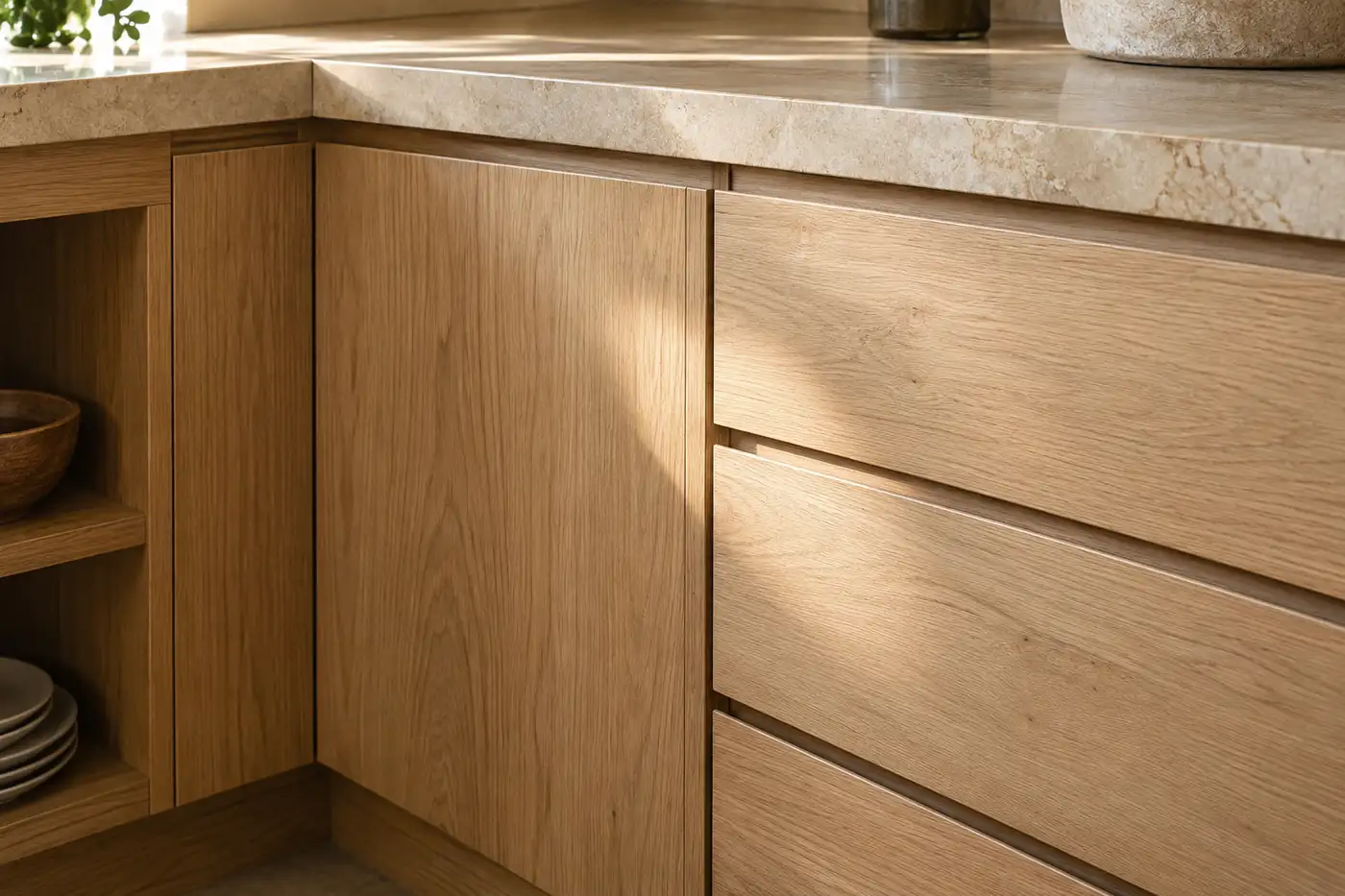
Species is only the beginning. Cut, board selection, stain, and sheen all change what you see. Rift-cut oak tends toward straight lines, while other cuts can show broader patterns or distinctive ray flecks.
Construction matters too. A cabinet may combine solid frames with natural veneer panels; flooring may be engineered; a tread needs a construction suitable for its installation. Natural wood veneer is real wood, but it is not the same construction as solid lumber.
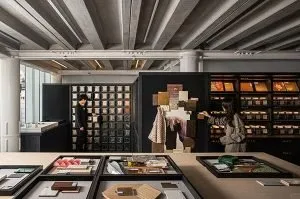
We recommend approving the actual proposed products together. Place the cabinet door upright and the flooring flat, as they will appear at home. Check them in daylight and evening lighting. Agree on an acceptable color range, not a promise that every board will copy one small sample.
If you love a reference photo, identify what attracts you: the lightness, grain, sheen, or contrast with stone. Share those details with your designer. They are more useful than asking for “the exact same oak” from a screen alone.
Should Cabinets, Floors and Stair Treads Match?
Using the same species can create continuity, especially between a floor and its adjoining staircase. It does not guarantee identical color. Different boards, cuts, and finishing processes can still produce visible variation.
Woodgrain’s 2026 trend article also highlights mixed wood tones. We see this as a useful design option: choose a dominant wood, then repeat a complementary tone in a few deliberate places.
| Direction | Cabinetry | Floor and stairs | Finishing touch |
|---|---|---|---|
| Quiet continuity | White oak | Coordinated white oak | Stone and painted walls provide relief |
| Warm contrast | Walnut island; warm white perimeter | Light white oak | Repeat walnut in a nearby cabinet |
| Scandinavian calm | Selected pale ash | Sample-approved pale ash | Linen and restrained metal accents |
Matching is especially useful when you want the staircase to feel like a continuation of the floor. Contrast is useful when an island or built-in deserves attention. If two finishes look almost identical but clash when placed together, try a clearer difference in lightness. You do not need three wood species simply because all three appeal to you.
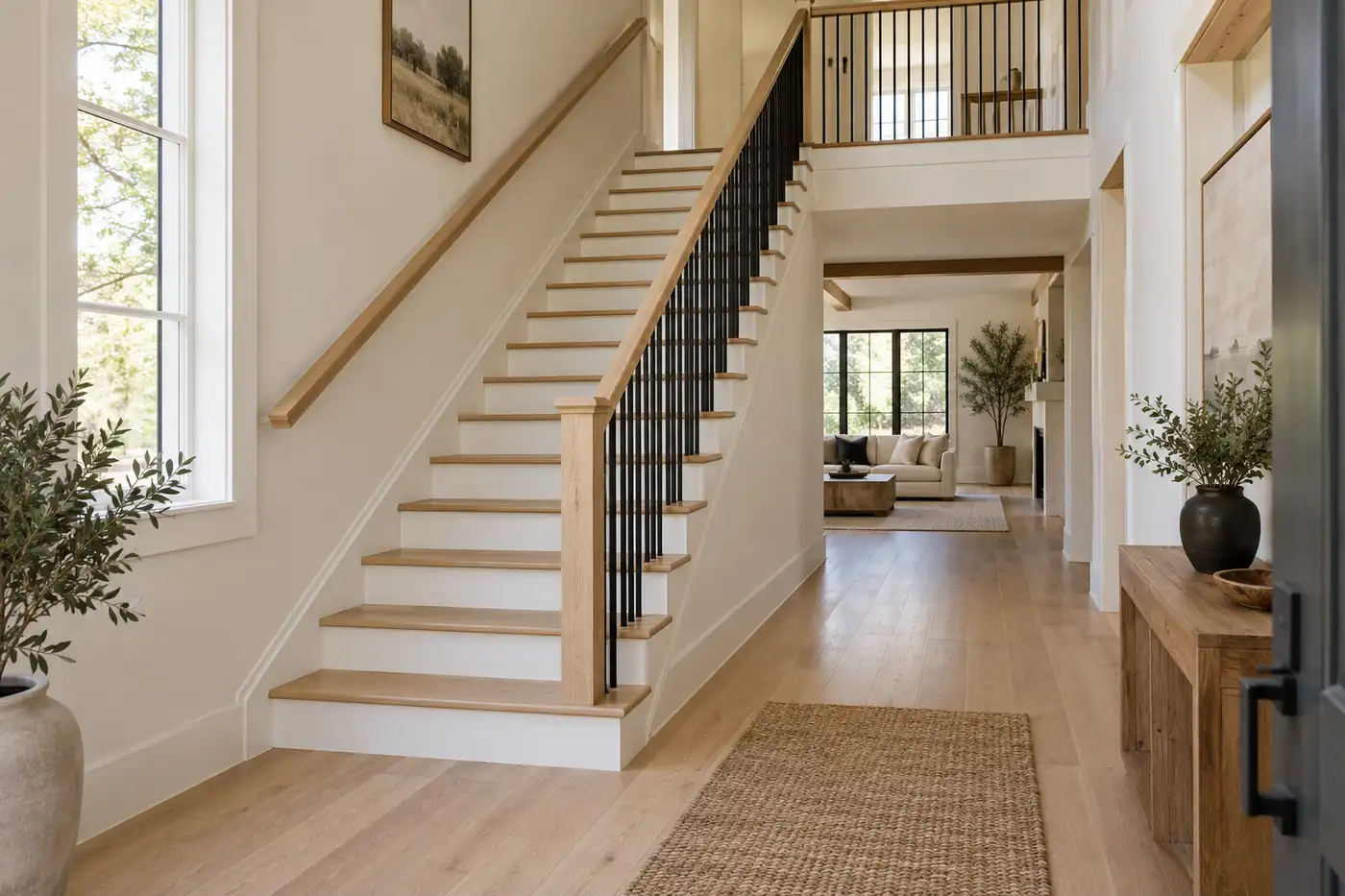
Where the floor meets the stairs, review tread color, nosing shape, thickness, and the landing transition together. Let your local installer confirm the dimensions before production.
For cabinetry, review grain direction and adjacent door panels. For flooring, review several planks, not just one. A coordinated home allows natural variation while keeping the overall palette intentional.
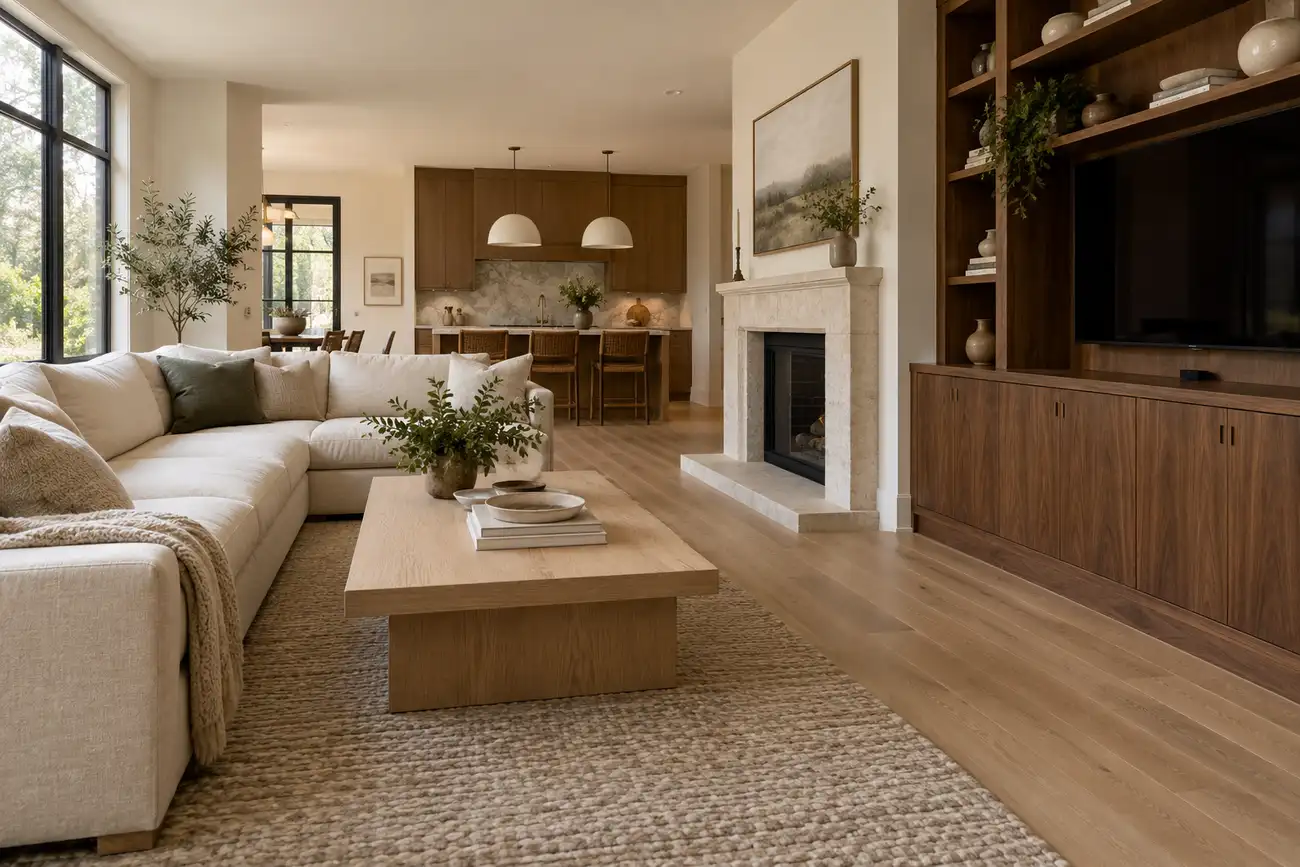
Compare Wood Costs on the Same Basis
Walnut is commonly positioned as a premium wood, but there is no dependable price ranking for every product. Selected ash, unusual widths, or carefully matched oak fronts can change the calculation.
A flooring price per square foot cannot describe a cabinet package or finished staircase. Ask for comparable specifications:
- Flooring: species, construction, thickness, width, finish, waste allowance, and whether installation is included.
- Cabinetry: the same layout, door construction, cabinet boxes, hardware, and finished end panels.
- Stairs: tread count, dimensions, construction, nosing, finish, and installation scope.
For imported products, compare the total delivered scope as well as the product quotation. Packaging, shipping, and local installation belong in the budget. Put a date on every price comparison; an old online range is not a current project quotation.
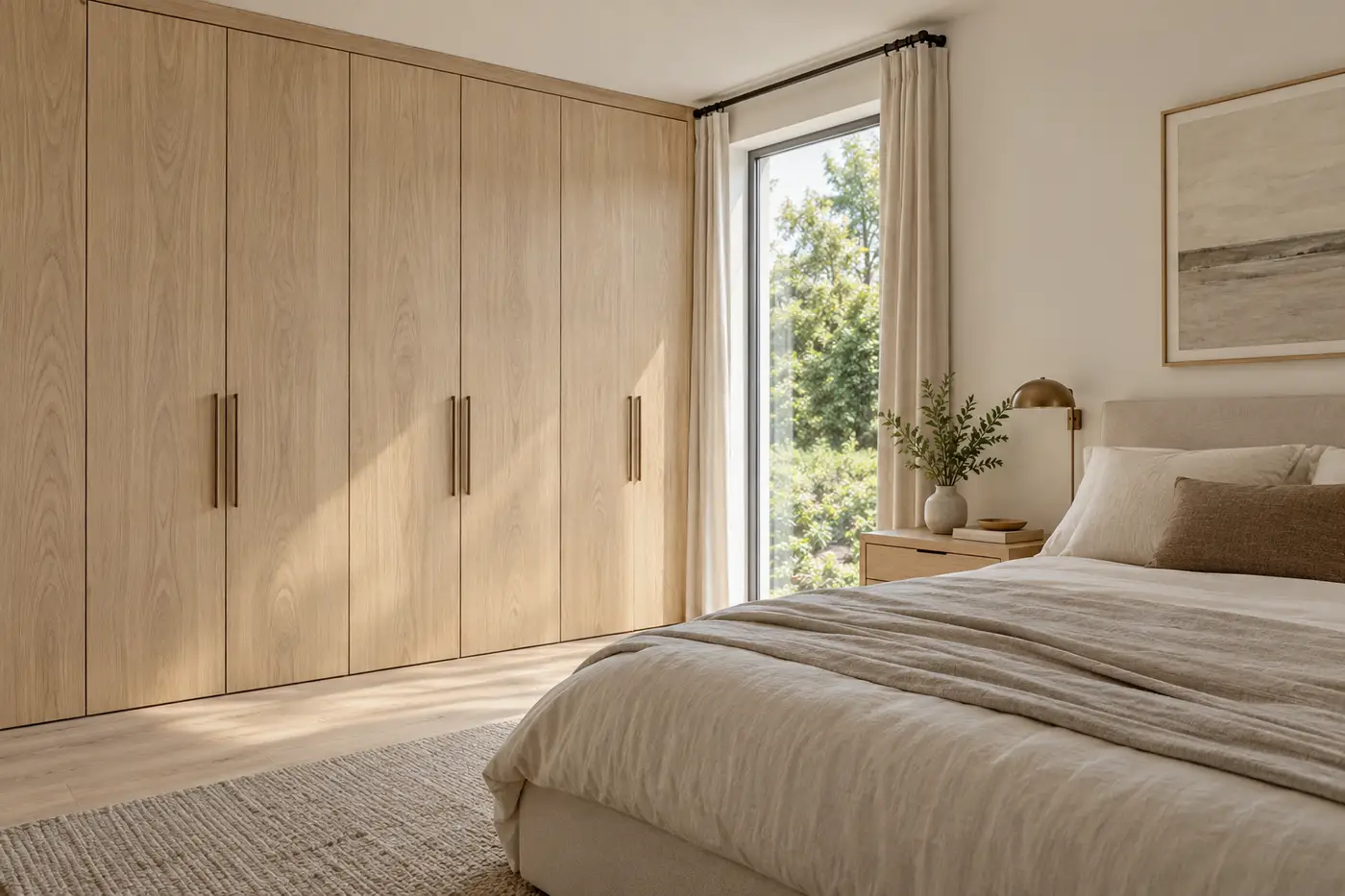
One-Stop Sourcing from China: Start with Samples
One-stop sourcing is most useful when it brings your material decisions into one coordinated process. Ordering everything through one supplier alone will not make different wood products match.
We suggest agreeing on a room-by-room schedule before production. Record the species, construction, grain direction, color range, sheen, and dimensions for each item. Then approve the cabinet door, flooring, and tread samples as a group.
Ask how approved samples will be referenced during production and how changes will be communicated. Confirm packaging, delivery responsibilities, and the drawings your installer needs.
At George, our interior design service connects space planning, style coordination, material selection, and 3D design. We can help you develop the overall palette before individual product choices pull the home in different directions.
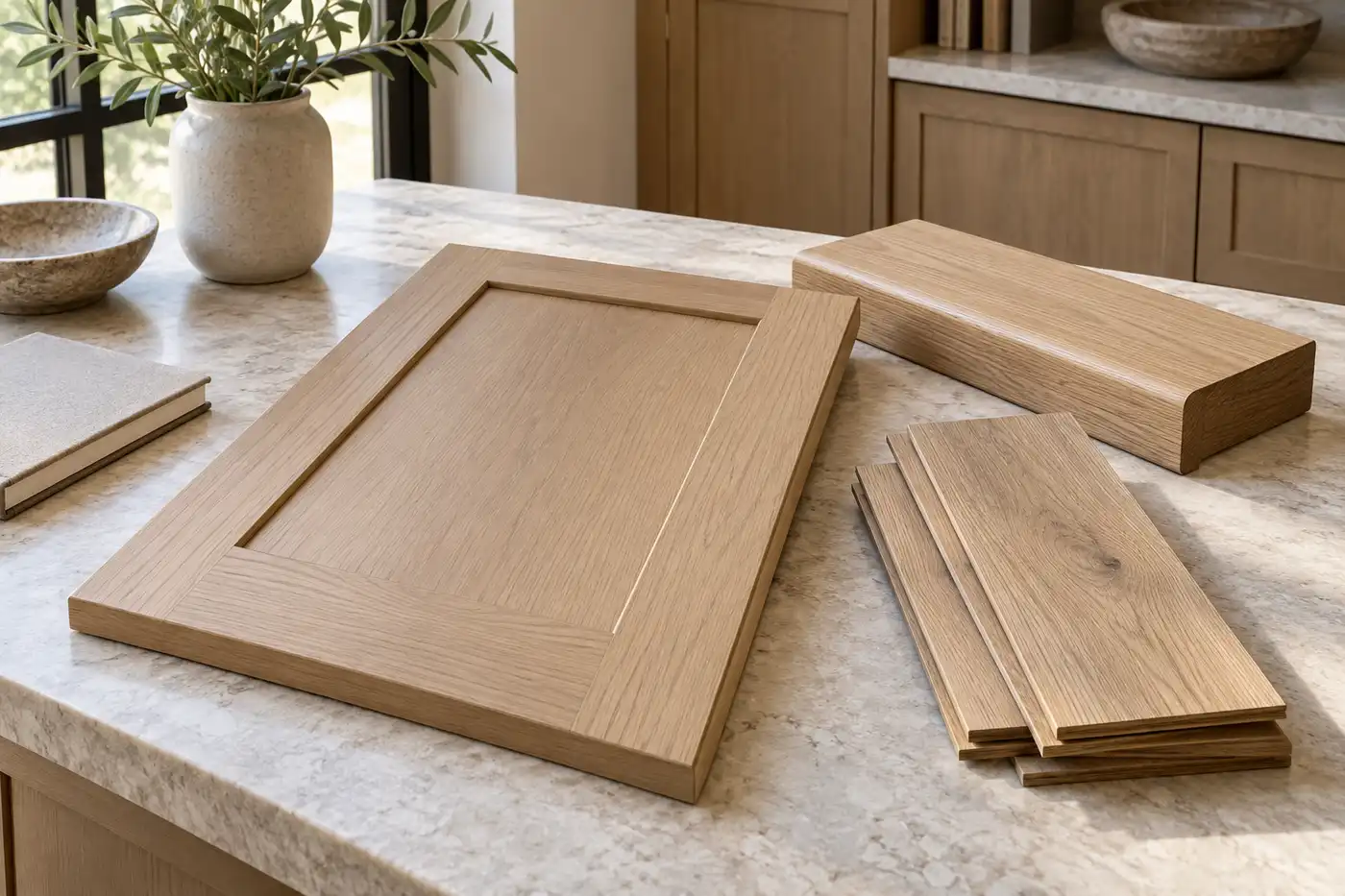
Keep one approved sample set for reference and make sure the supplier and installer understand the same specification. Include photographs for context, but use physical samples for final color decisions.
Before placing the order, ask whether all required components are available in the proposed finish. A beautiful cabinet sample is less helpful if the matching landing pieces cannot be supplied.
Frequently Asked Questions
Is white oak still in style in 2026?
Yes. It remains relevant in current wood-focused design. Choose its cut and finish for your home rather than assuming every pale oak product looks alike.
Is ash cheaper than white oak?
Sometimes, but not consistently. Compare actual quotations with the same dimensions, construction, finish, and color selection. Species alone cannot settle the budget.
Is walnut suitable for busy household floors?
It can be, provided you accept its lower indentation resistance compared with white oak and ash. Review the flooring product, finish, warranty, and care requirements.
Can walnut cabinets work with white oak floors?
Yes. Light oak and darker walnut can create deliberate contrast. Compare finished samples beside your countertop and repeat the darker tone elsewhere for visual connection.
Plan a Coordinated Wood Palette for Your Home
Share your floor plan, photos of existing finishes, and a few interiors you love. We can help you compare wood tones and develop a material palette that connects your cabinetry, flooring, stairs, and furniture.