











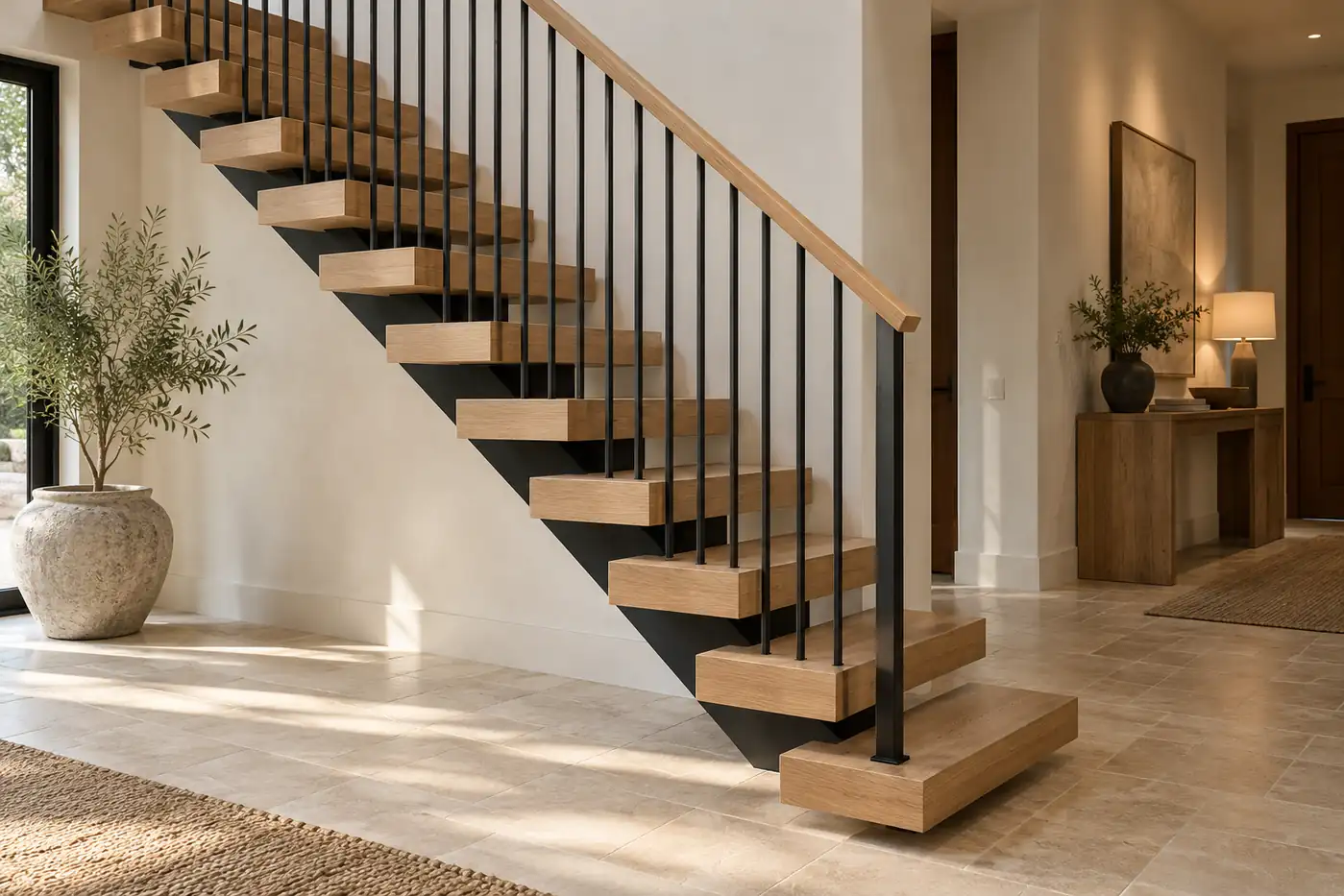
A staircase can look beautifully simple in a photo. The quote rarely is. One supplier lists the steel and treads; another includes railings; your builder adds installation. Suddenly, three attractive prices describe three different purchases.
At George, we suggest starting with one question: What will this staircase cost, finished and ready to use? This guide separates early planning allowances from published supplier prices, then shows you how to compare materials and sourcing options without losing track of the total.
Table of Contents
How Much Should You Budget for Custom Stairs?
For a residential staircase connecting two floors, use the following allowances to start a conversation with your designer and installer. They are planning targets, not verified national averages or fixed George quotations. Assume ordinary site access and no major floor-opening reconstruction.
| Staircase style | Early installed-budget allowance | What moves the price |
|---|---|---|
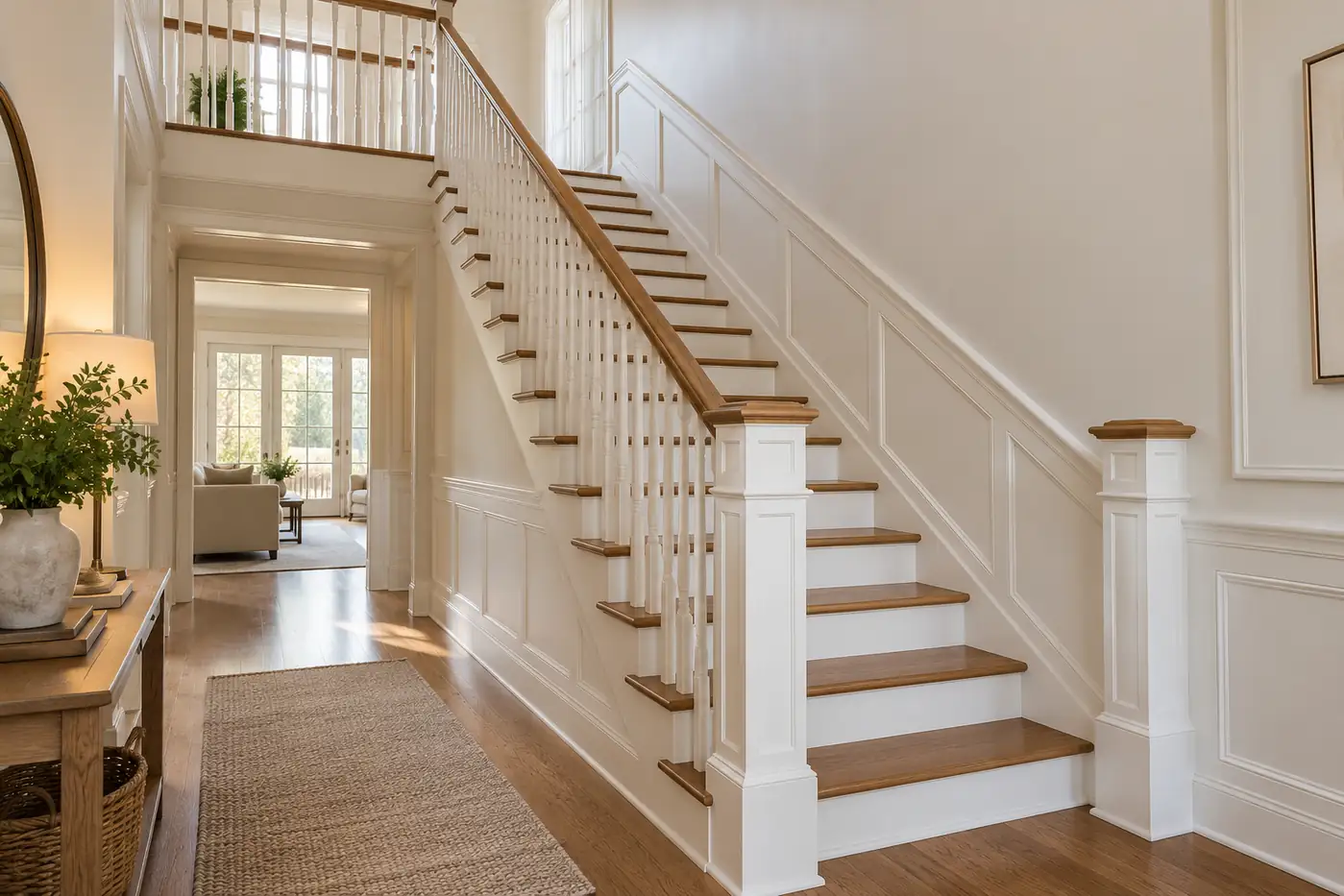
| Simple traditional wood | $5,000–$15,000 | Wood species, railings, finish and local labor |
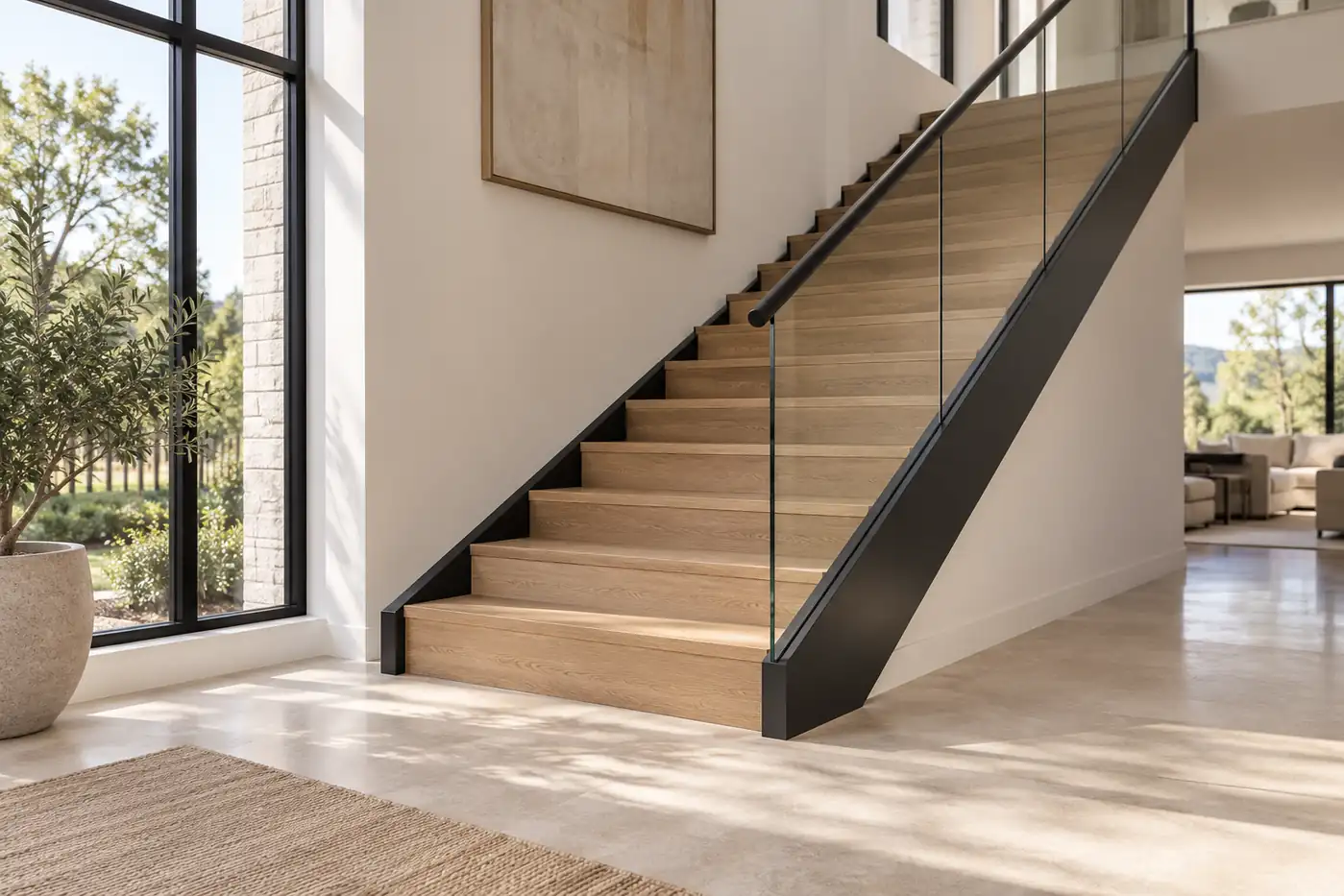
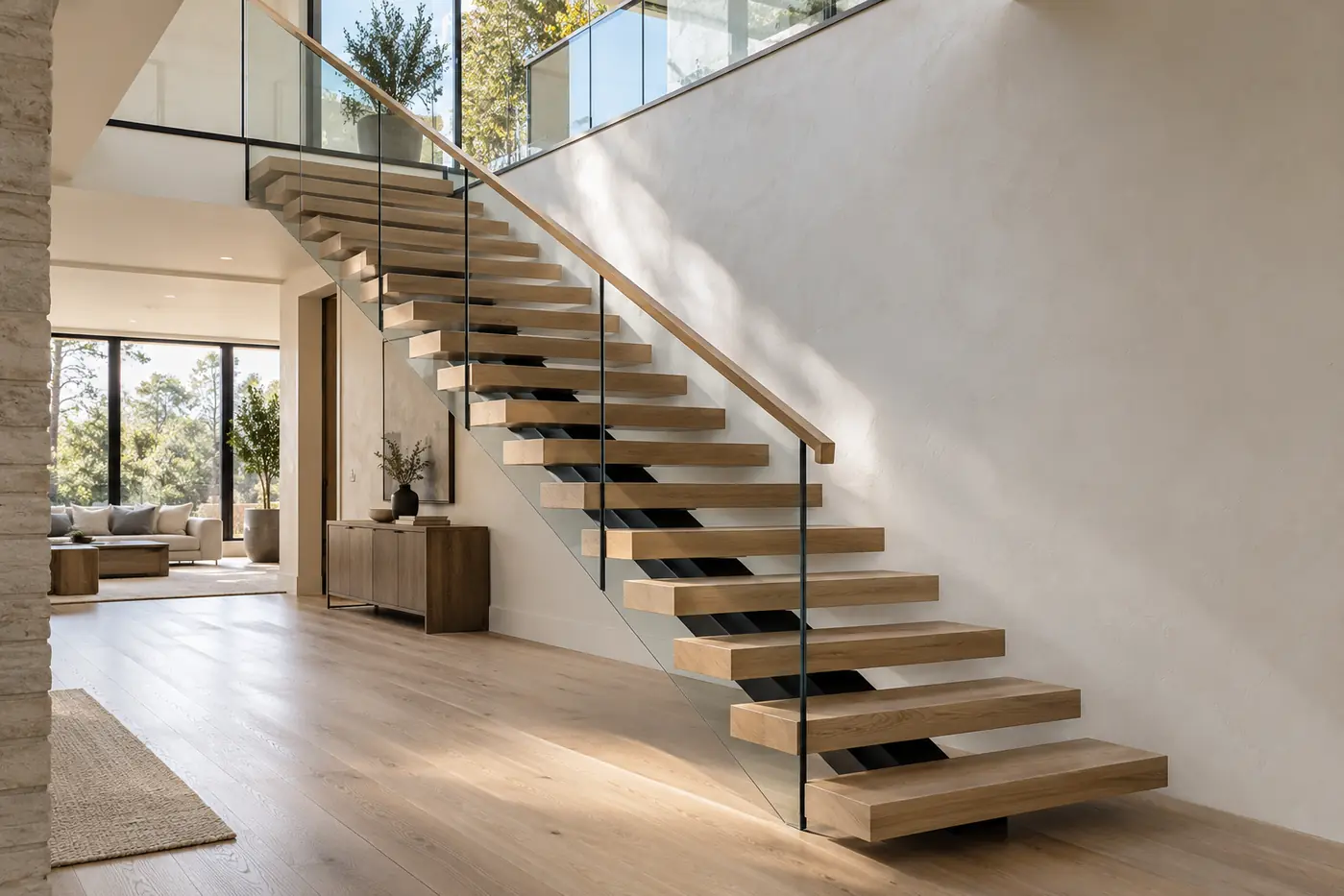
| Floating steel and wood | $15,000–$60,000+ | Steel support, treads, glass and installation |
| Custom curved or helical | $20,000–$80,000+ | Radius, curved components and engineering |
The lower wood allowance suits simpler work. Fully custom traditional stairs can exceed it substantially. For context, FJR Stair & Door lists $8,000–$35,000+ for new custom stairs and $15,000–$60,000+ for floating stairs in Dallas–Fort Worth, based on its design, fabrication and installation projects.
These regional figures are useful reference points. A complex luxury staircase can sit well above the table, especially with extensive landing railings or difficult structural work.
What Does a Staircase Quote Actually Include?
Supply-only normally means specified components. Delivered means transport to an agreed destination—check whether that is a port, warehouse or your property. Installed should describe the finished work, but may still exclude demolition, painting or surrounding repairs.
A useful example comes from Viewrail’s August 2026 pricing: a straight, 9-foot floor-to-floor FLIGHT Mono system with cable railing is listed at $16,000. Shipping, taxes and installation are excluded. That number is a system reference, not a move-in-ready project total.
Ask every supplier to mark inclusions line by line: structure, treads, railings, drawings, hardware, finishes, delivery and installation. Also distinguish replacing tread surfaces from replacing the entire staircase. They belong in different budgets.
Write the date and delivery location beside each price you collect. Ask how long the offer remains valid, and whether a later measurement change triggers redesign or fabrication charges. A low opening price is less useful than a clearly defined scope you can take to your builder.
How Materials and Railings Change the Price
Wood: Look Beyond the Species
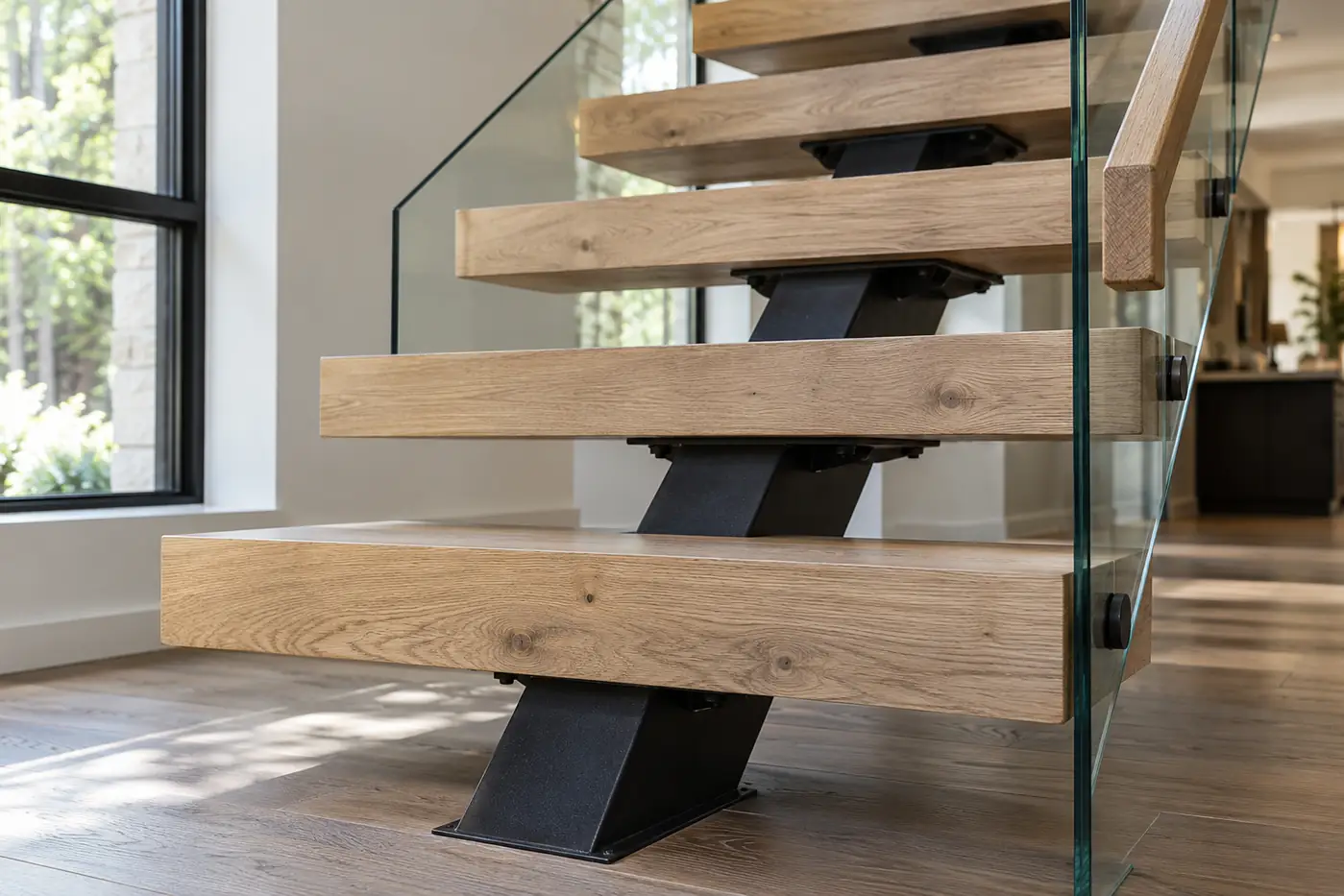
Two “oak staircases” can be quite different. Compare species, tread width, thickness, construction and finish. A wide, thick tread with concealed fixing pockets needs more material and machining than a simple replacement tread. Ask for a finish sample before approving a color match.
Steel, Stone and Glass: Price the Whole Assembly
| Specification to compare | Useful question for the quotation |
|---|---|
| Wood treads | What are the species, finished thickness and actual width? |
| Steel structure | Are fabrication, connection hardware and coating included? |
| Stone finish | Does the price cover the support structure as well as the stone? |
| Glass railing | Which panels, mounting hardware and handrail are included? |
Steel cost includes fabrication, connections and coating—not simply metal weight. Curved or highly concealed structures need different work from straightforward straight-flight supports.
For marble or other stone, establish whether the quote covers cladding over a supporting structure or a complete tread assembly. Include edge finishing, support, handling and installation. For glass, distinguish guard panels from structural glass treads; they are very different products.
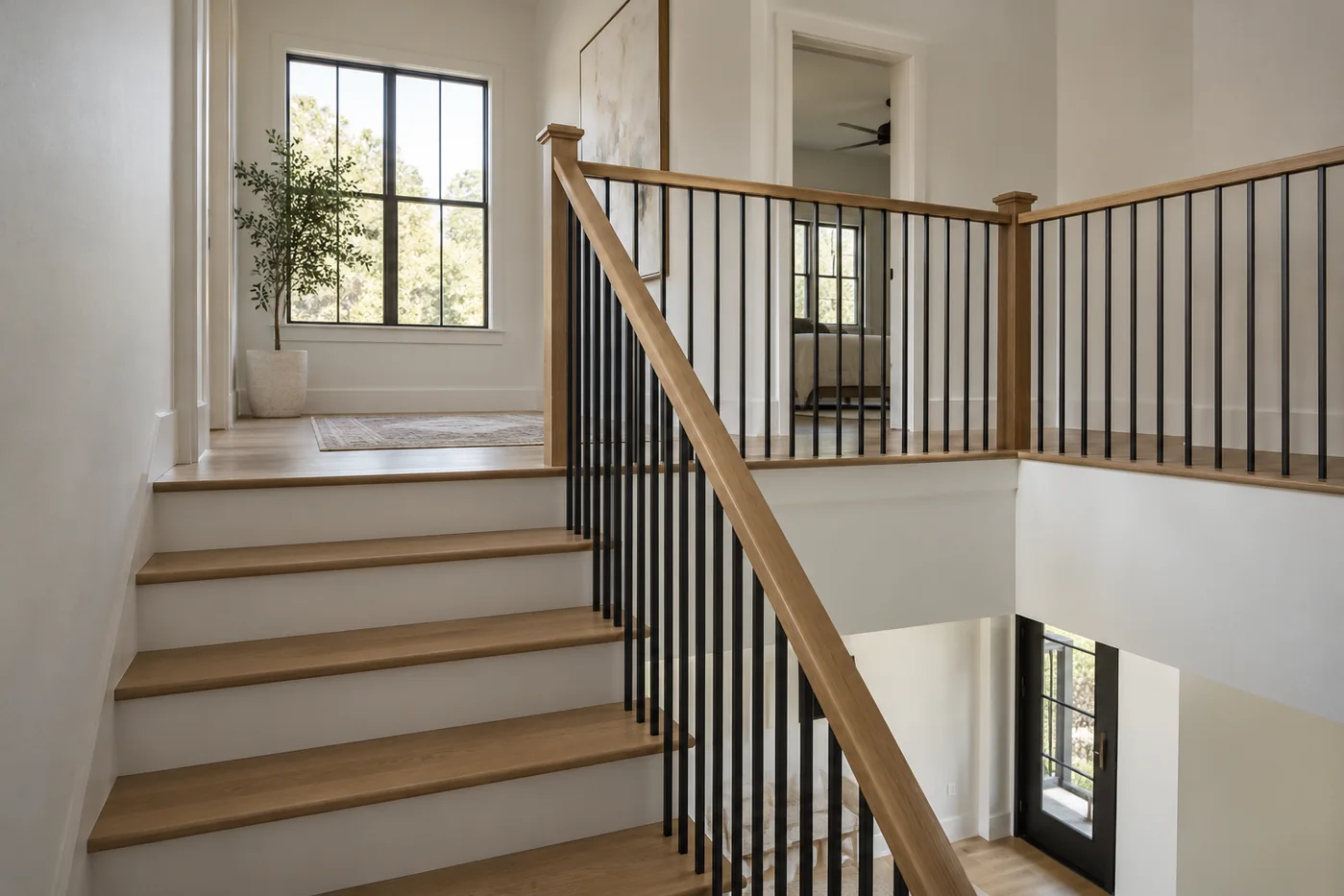
Railings deserve their own line. Compare the material, mounting system, handrail and full length, including platforms and upstairs openings. A short stair with a long mezzanine guard can have a surprisingly large railing bill.
Why Similar Staircases Receive Different Quotes
Height and tread count: use the finished floor-to-floor height. A taller connection may require additional treads, longer supports and more railing. Tread count follows the actual stair design; it should not be guessed from ceiling height.
Layout and width: turns introduce landings or shaped treads, additional connections and different fabrication. Wider stairs change both material quantities and structural requirements.
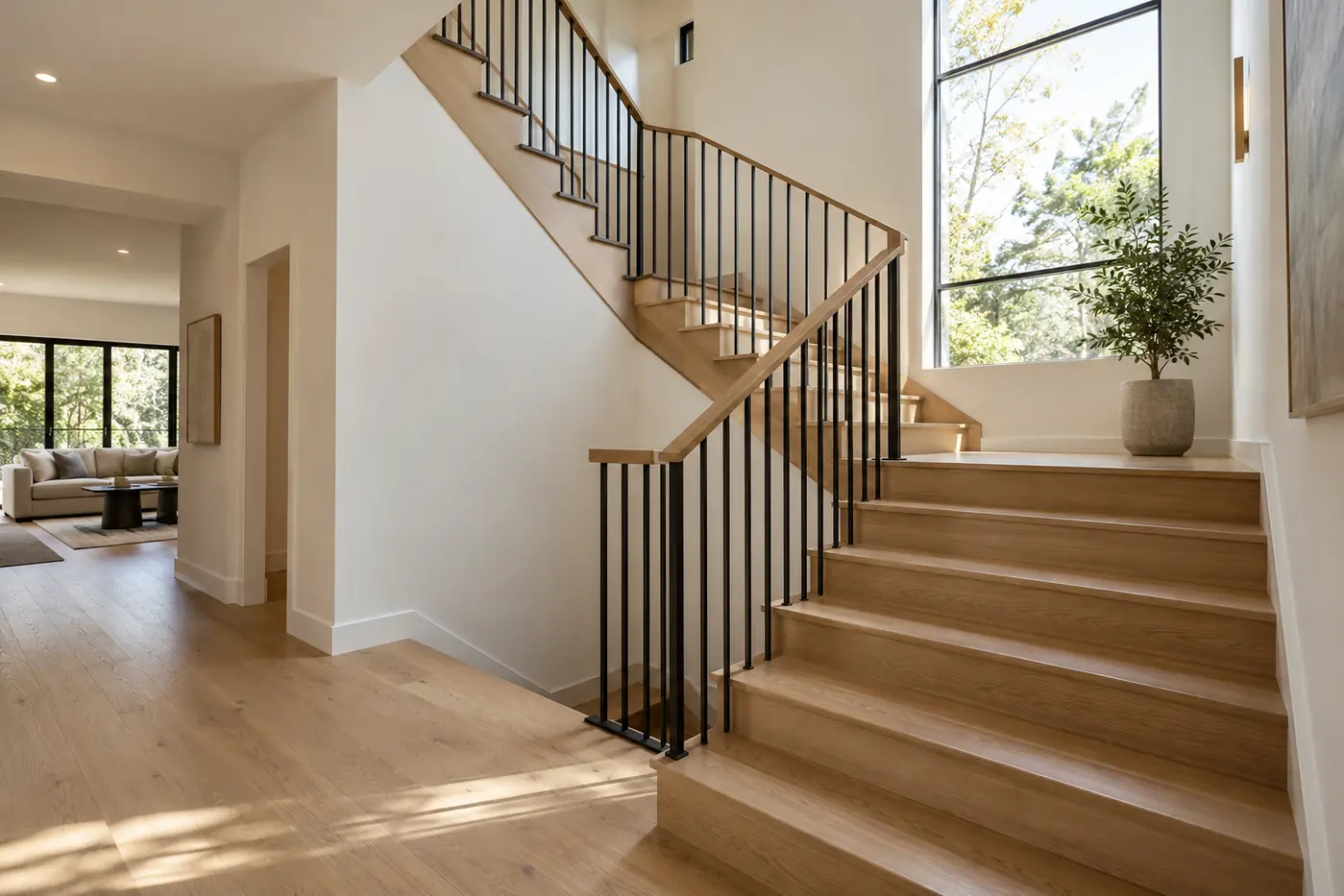
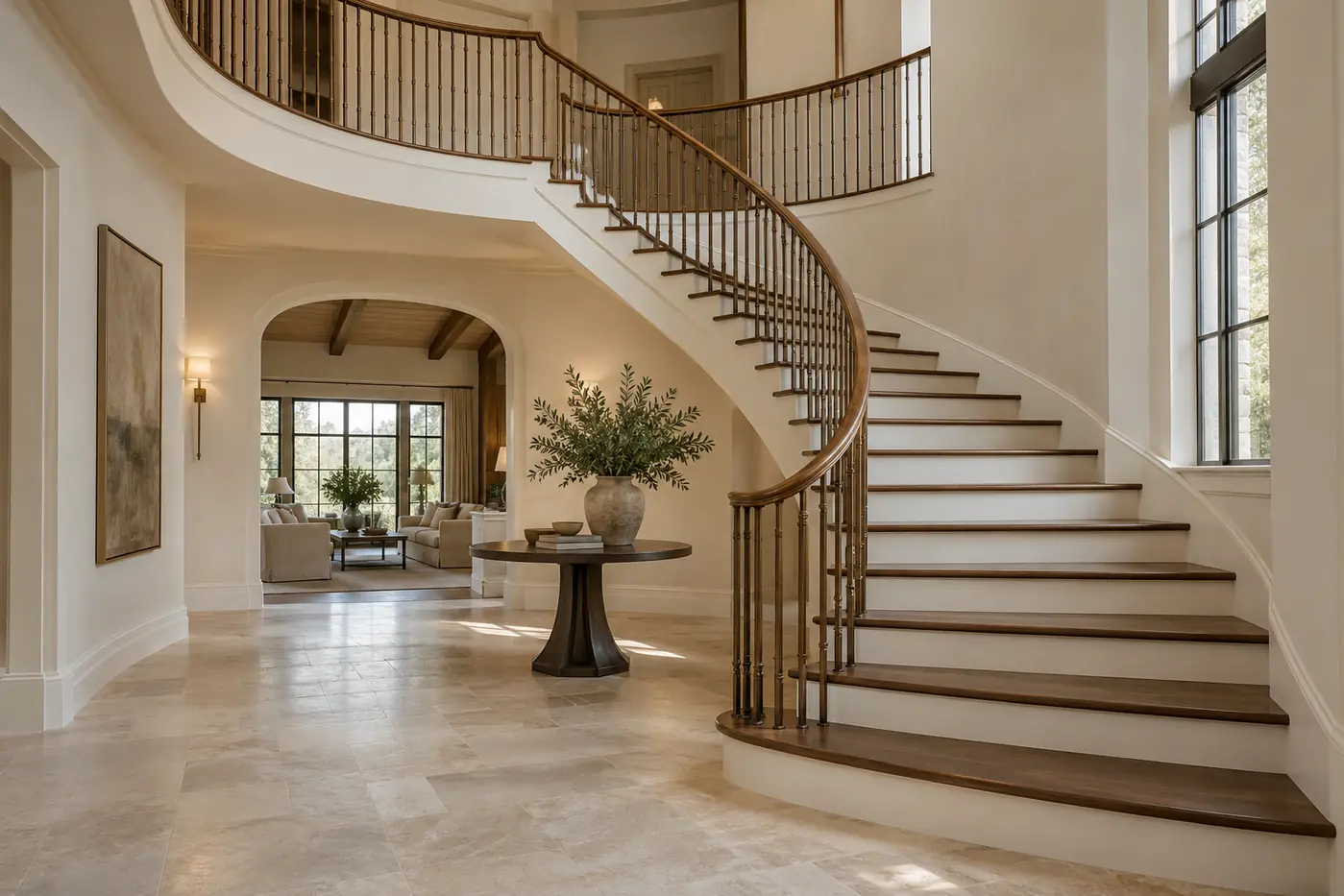
Curves and customization: a curved staircase may need individually shaped components, curved handrails and specialized installation. Custom colors, hidden fixings and integrated lighting add separate coordination tasks.
Site conditions: removing an old stair, strengthening framing, lifting large components or repairing nearby finishes can change the total substantially. We would rather identify those items while reviewing plans than discover them after fabrication.
US-Sourced vs Imported Stairs: Compare the Finished Cost
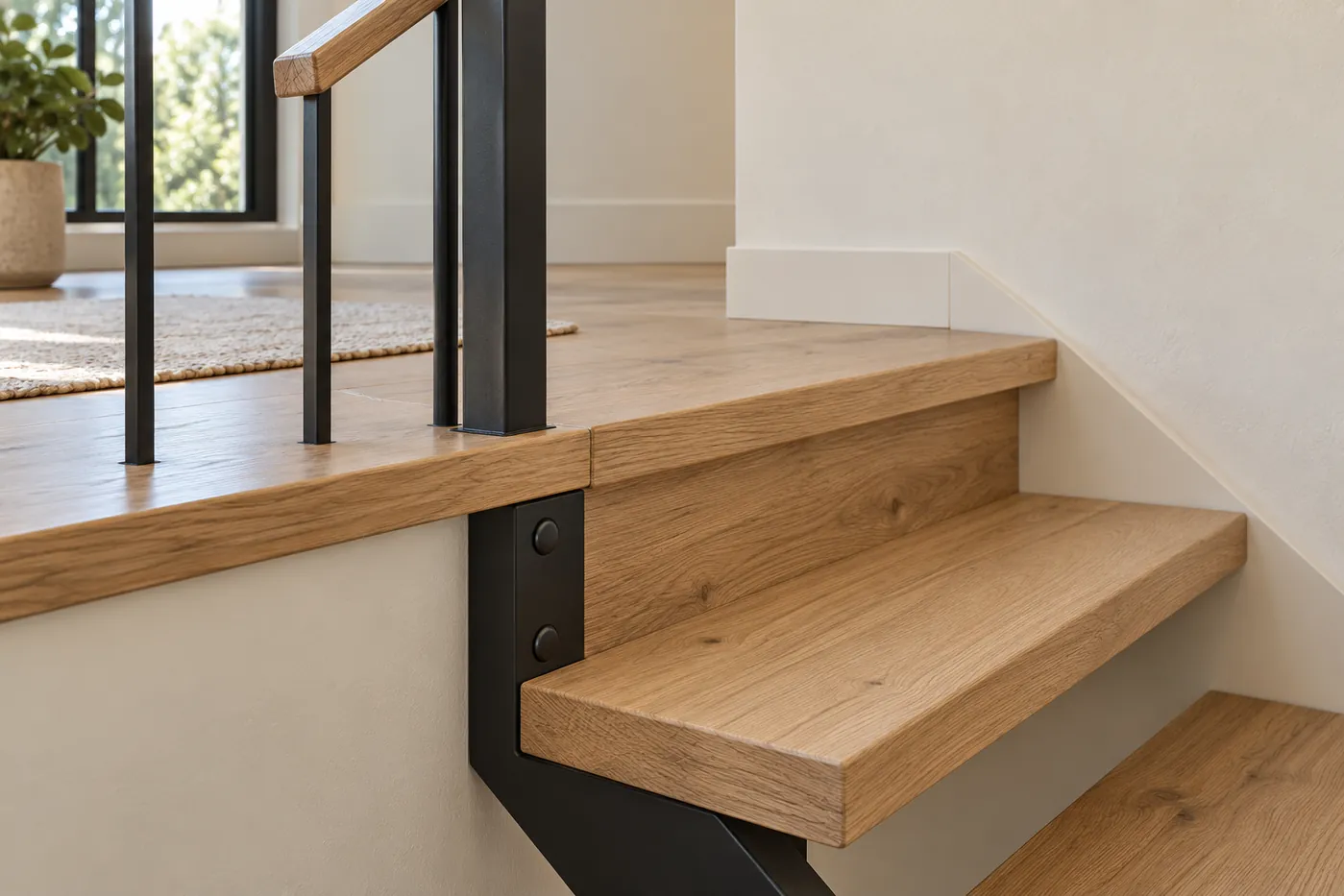
For an initial China-sourcing comparison, our preliminary planning allowance for a floating staircase system is $6,000–$18,000 including freight to port. This is an indicative starting range, subject to specifications, destination, freight conditions and a current written quote. It is not an installed US price.
Before comparing it with a local offer, match the floor height, layout, tread dimensions, wood species, finish and railing scope. Then establish which drawings, hardware and services each offer includes.
Add applicable customs duties, clearance, port charges, inland delivery, unloading, local engineering review, site preparation and installation. Check the agreed delivery terms so you neither omit charges nor count them twice.
Claims of “40–60% savings” need the same scrutiny. That may describe a package-price difference; it does not establish the saving on your finished project. Calculate the result from two complete, comparable totals.
Also compare what happens after delivery. Who checks quantities and damage? How are replacement parts supplied? Who pays for a second shipment if something is missing? Record the answers, the packing requirements and the agreed drawing revision in the order. They are part of a practical sourcing decision, even when they do not appear in a headline price.
A Worked Example: From Port Price to Installed Total
The following figures are hypothetical arithmetic, not market quotations or a completed George project. Assume both options deliver the same staircase specification and finished scope.
| Budget item | US-sourced option | Imported option |
|---|---|---|
| Complete installed project | $30,000 | Calculate below |
| System and freight to port | Included above | $12,000 |
| All remaining delivery, fees and site work | Included above | $8,000 assumed |
| Comparable finished total | $30,000 | $20,000 |
| Saving against US-sourced total | — | $10,000 / 33% |
Comparing $12,000 with $30,000 suggests a 60% difference. Once the assumed remaining costs are included, the saving is approximately 33%. The staircase did not change; the comparison became complete.
For your own budget, replace every assumption with a written allowance or quotation. Keep a separate contingency suited to the unresolved work, especially when existing framing cannot be fully inspected. Ask your builder what could change the final bill.
We recommend assigning an owner to each budget line: supplier, freight provider, installer or general contractor. If everyone assumes someone else has allowed for unloading or finishing, the expense does not disappear. Keep any undecided item visible as an allowance until the responsible party confirms it in writing.
How to Control Cost Without Losing the Look
Start with the design decisions that affect the most components. A simpler layout, standard finish or different railing system may protect the overall look while reducing fabrication work. Request separate prices for the base specification and each upgrade.
Resolve finished dimensions, fixing locations and installation access before production. If you want integrated lighting, coordinate channels and wiring early. For imported stairs, have your local installer review the shop drawings and installation method before the order is finalized.
Keep structural connections, guards and required project approvals within the agreed design. We prefer finding savings through clear specifications and fewer changes, rather than leaving essential work out of a quote.
For example, if the warm wood appearance matters most to you, ask whether a simpler metal balustrade would preserve that feeling. If uninterrupted views are the priority, keep the glass and explore a more straightforward stair layout. Spend deliberately on the feature you will notice every day.
Common Questions About Custom Stairs Cost
Are railings and installation usually included?
Do not assume they are. Ask for separate confirmation of stair-flight railings, landing guards, delivery and installation. Published prices often cover a specific package with exclusions.
Does a renovation cost more than a new installation?
It can, when demolition, access restrictions or framing changes add work. Reusing a suitable existing structure may reduce costs, but a surface refresh is not comparable with a full replacement.
Can my local contractor install imported stairs?
Confirm this before ordering. The installer should review the drawings, connection details, supplied hardware and site requirements, and agree who handles measurements, approvals and any adjustments.
A useful estimate begins with your floor plan, finished floor-to-floor height, opening dimensions, reference images and project ZIP code. Add your preferred materials, railing scope, construction stage and target schedule. Clear information makes the next conversation much more productive.
Let’s Build a Staircase Budget Around Your Plans
Send us your floor plan, preferred stair style and project location. We’ll help you compare suitable materials and clarify what your quotation includes, so you can plan the complete project with confidence.