















You have chosen the frame color, compared the glass options, and finally found windows that suit your Florida home. Then someone asks for the NOA or FL number. Suddenly, a design decision becomes a paperwork puzzle.
We recommend answering that question before paying a deposit. A window described as impact-rated is not automatically approved for your address, and a legitimate approval does not cover every possible size or installation.
The practical rule: identify your jurisdiction, verify the exact product approval, and match its limits to each opening. In Miami-Dade and Broward, the product must meet the applicable High-Velocity Hurricane Zone requirements. A suitable Miami-Dade NOA or an HVHZ-approved Florida Product Approval can provide the approval pathway.
This guide explains what those documents mean, how to check them, and which questions to bring to your supplier and local permit team.
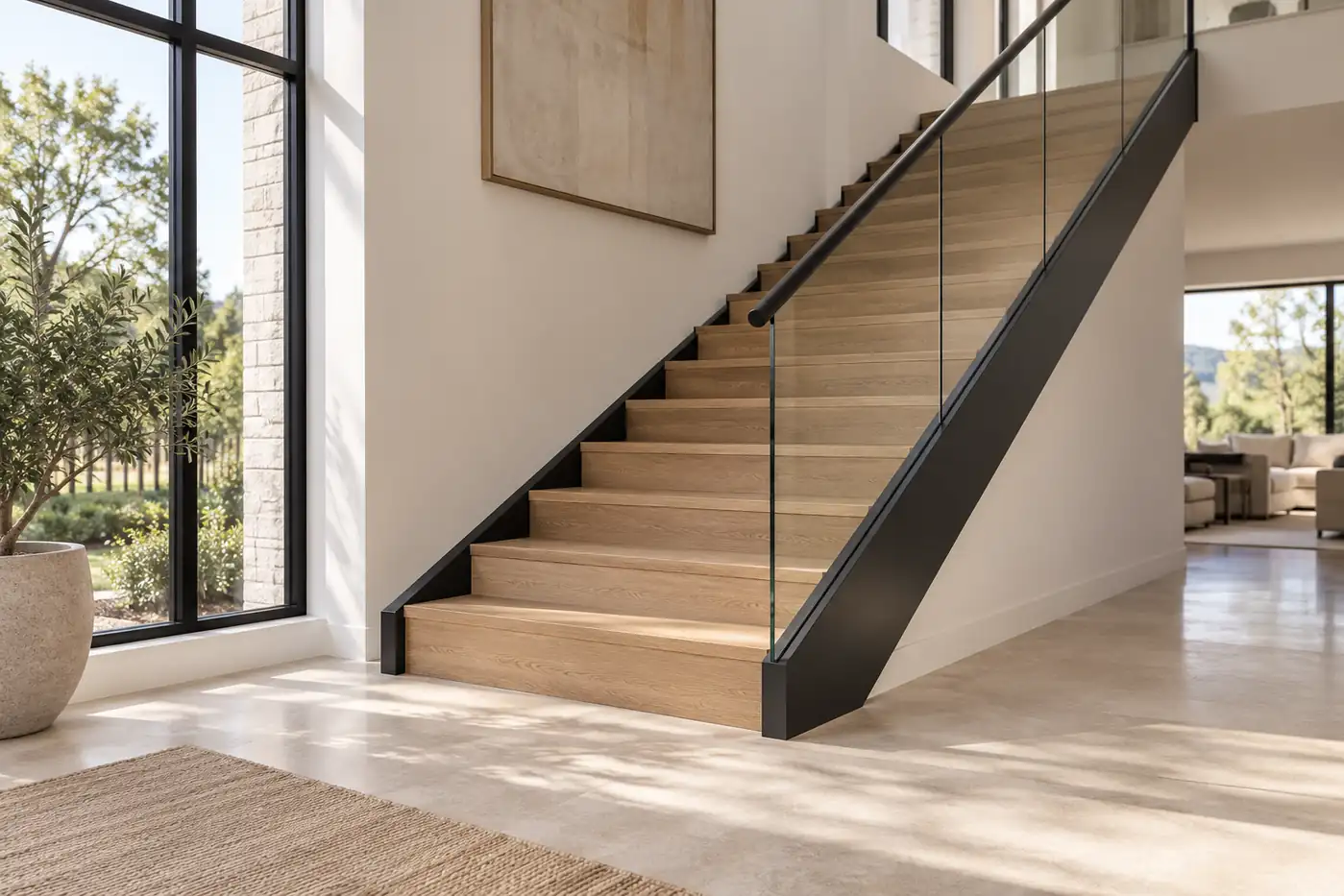
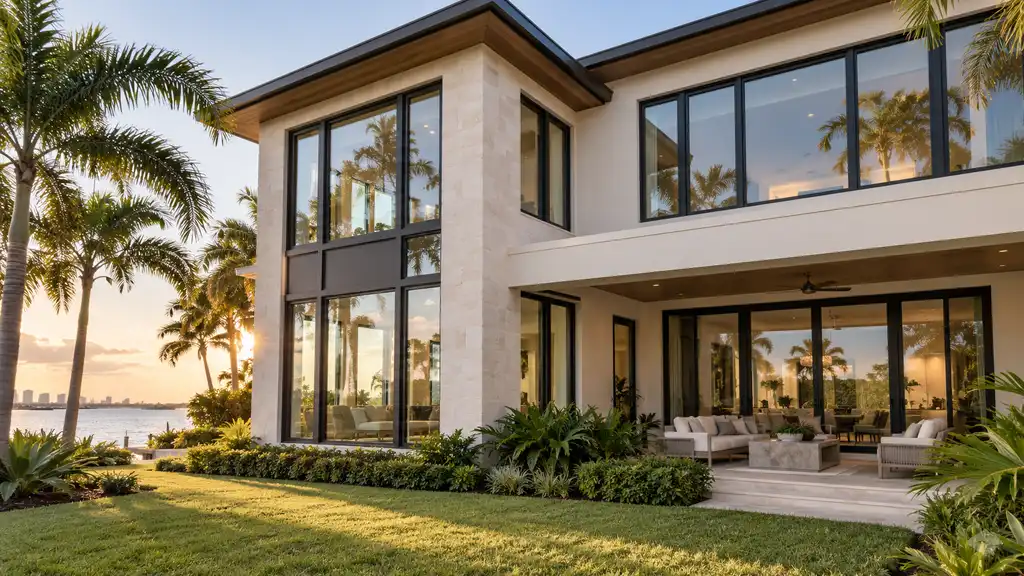
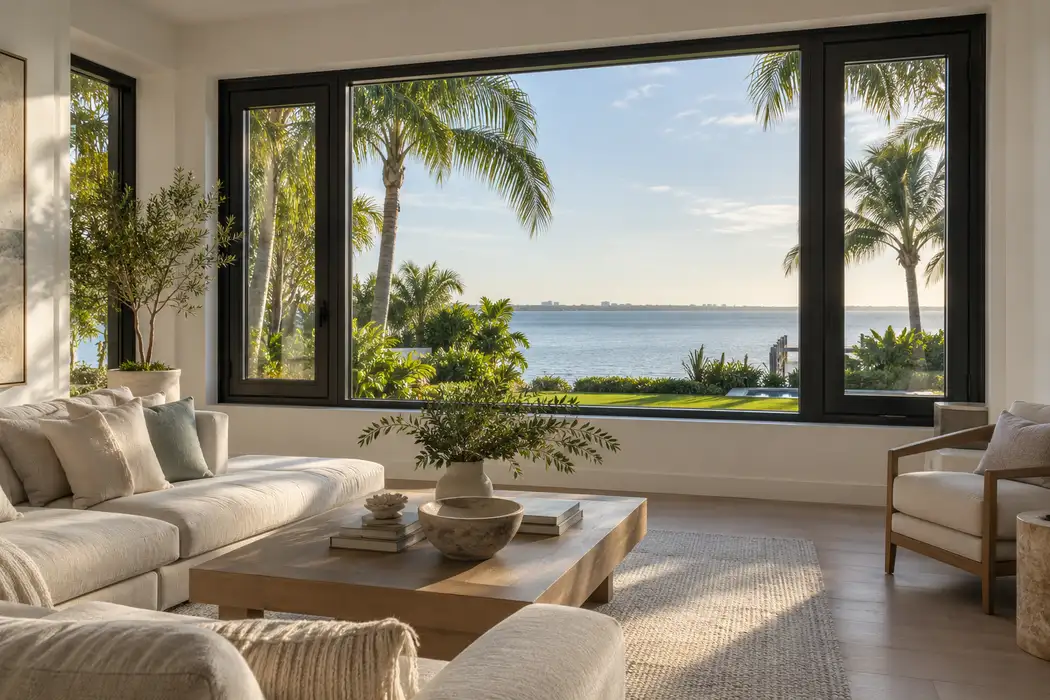
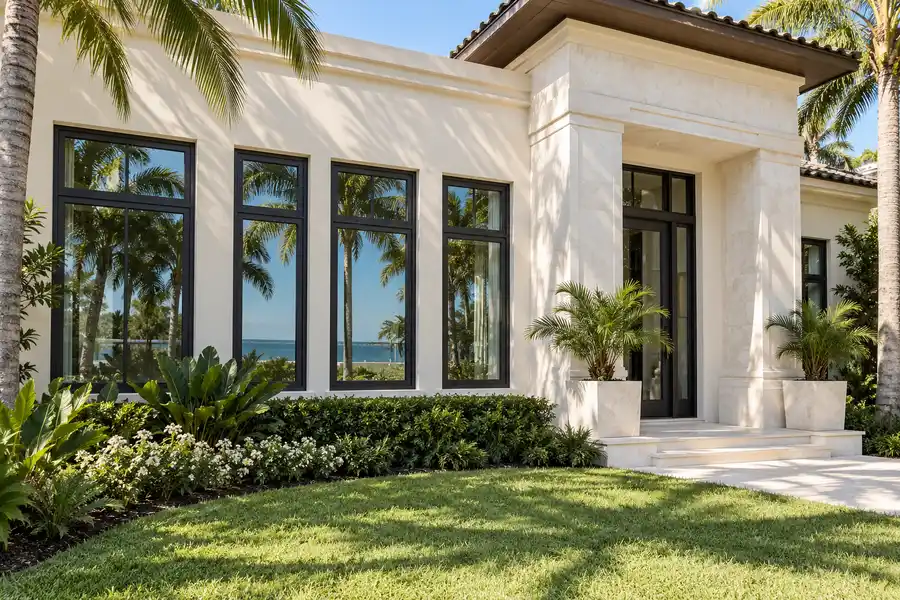
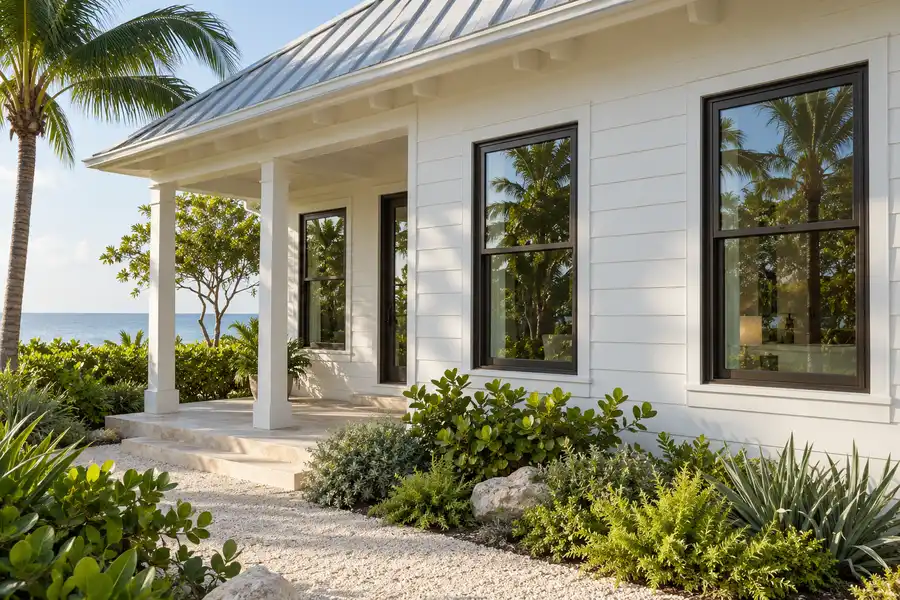
Images are illustrative design renderings. Verify approval documents for any product specified for your project.
Impact-Rated, FL Approved, and NOA: What Each Means
Impact-rated describes performance
Impact testing evaluates how a window assembly responds to windborne debris and the pressure changes that follow. ASTM E1886 describes the test method; ASTM E1996 specifies performance requirements and test parameters. Passing these tests provides performance evidence. It does not, by itself, issue an NOA or FL number.
For hurricane performance, the glass, frame, hardware, anchors, and installation work together. Laminated glass alone does not establish approval of the complete window.
Florida Product Approval is a statewide approval system
An FL number identifies an application or product in Florida’s approval database. Read the individual product entry and its limitations. Some entries support HVHZ use; others do not. Impact resistance is also a separate field, so an FL number alone does not mean impact protection.
Miami-Dade NOA is a product-specific acceptance
A Notice of Acceptance is issued through Miami-Dade’s Product Control process. Its supporting documents identify the accepted system and conditions, including dimensions, glazing, design pressures, and installation details.
An NOA can cover a non-impact window. Check the Missile Impact Rating, rather than assuming the NOA label guarantees debris protection. One historical official NOA lists that rating as None; it is an illustration of the distinction, not a current product recommendation.
Use the test-standard edition referenced by the applicable code and approval documents. A newly published ASTM edition does not automatically replace the version used for an existing approved system. Your project team should check the relevant references.
How Testing, Approval, and Project Acceptance Fit Together
These terms do not form a simple good-better-best ladder. NOA and FL approval are different approval pathways, while impact rating describes a performance characteristic.
HVHZ testing commonly references TAS 201 for impact, TAS 202 for static-pressure-related evaluations, and TAS 203 for cyclic pressure. A test report is one part of the technical evidence supporting approval.
Miami-Dade also reviews technical documentation and provides quality assurance. The result applies to the approved product and supported configurations, not everything sold under the manufacturer’s name.
The relationship below is a buying guide, not a substitute for the approval’s detailed conditions. A product may carry both an NOA and an FL number, but having both is not a universal requirement.
An NOA can also be used outside Miami-Dade where the authority having jurisdiction permits it. Conversely, Florida law establishes statewide acceptance within the conditions of a state approval. A compliant state-approved product does not require a second round of local product testing simply because the approval carries an FL number. The local permit review still checks how it is used on the building.
Impact + pressure testing, as applicable
Accepted system + stated limitations
FL entry + HVHZ/impact scope
Alternative approval pathways; some systems carry both.
Location · Size · Glass · ± pressure · Installation
Start With Your Address: Which Requirements Apply?
The Florida Building Code’s HVHZ consists of Miami-Dade and Broward counties, including inland properties in those counties. It is not simply a strip along the beach.
For an HVHZ project, check that the proposed system supports HVHZ use and the required impact protection. A qualifying FL approval should not be dismissed just because it is an FL number: Miami-Dade’s window permit guidance explicitly accepts Florida Building Commission product approvals.
Outside HVHZ, ask whether your address is in a Wind-Borne Debris Region, or WBDR. This is a separate code designation. Being outside Miami-Dade and Broward does not remove wind-load or debris-protection requirements.
Some projects can use approved shutters to provide required debris protection instead of impact glazing, subject to applicable code and approval conditions. The underlying window still needs to satisfy its own requirements.
Before choosing a system, send your local designer or permit team the full address, building height, opening locations, and dimensions. Ask for the applicable code edition, protection requirements, and positive and negative design pressures. An address starts the process; it does not determine every window specification by itself.
Think of a Miami house, a Fort Lauderdale renovation, and a Key West home. The first two are in HVHZ counties; Key West is in Monroe County, outside that designation. All three still need a project-specific wind and opening-protection review. Choosing by city reputation or distance from the beach can miss the actual requirements.
| Project location | Selection checkpoint |
|---|---|
| Miami-Dade or Broward | Verify HVHZ use, impact protection, and opening-specific limits. |
| Palm Beach, Monroe, Collier, or other counties | Verify WBDR status, local project requirements, and approval scope. |
| Any Florida address | Match the exact system to dimensions, wind pressures, and installation. |
How to Check an NOA or FL Number Before Ordering
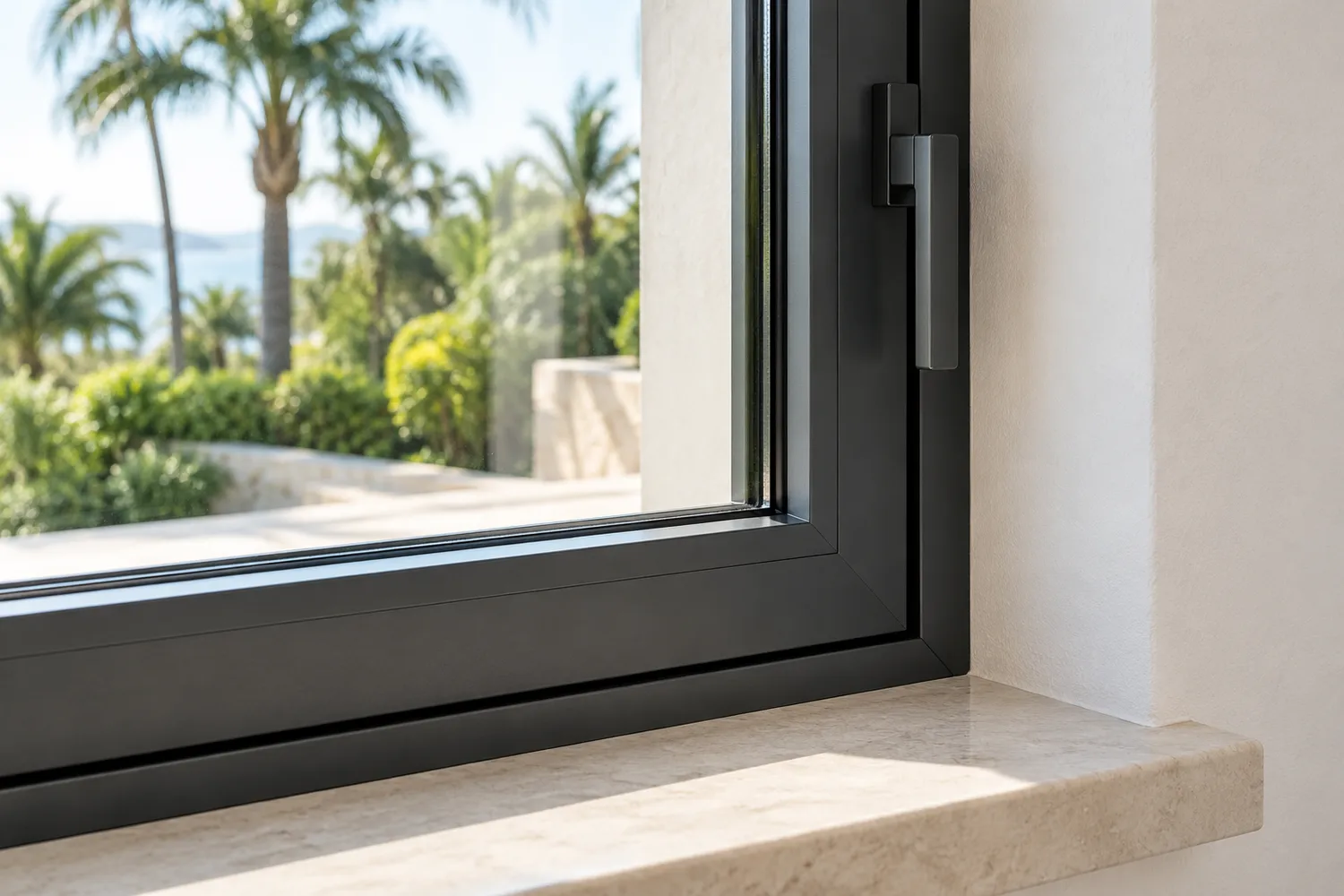
Ask for the complete approval and installation drawings, not a cropped certificate or a brochure badge. Then verify the number in the official database.
Use the Florida Product Approval Search for FL listings and the Miami-Dade Product Approval page for NOA searches. Florida’s search accepts an application number or a specific product number. Match the product entry, revision, and code version relevant to your project.
For an FL listing, look for Approved for use in HVHZ and Impact Resistant separately. Review the attached evaluation and installation documents. For an NOA, check its current status, expiration, impact rating, and referenced drawings. An older PDF may be superseded.
We find a simple window schedule useful: give each opening an identifier, then record its dimensions, product series, glazing option, approval reference, and required pressures. This makes comparisons clearer than keeping several almost-identical brochures.
If a supplier offers custom sizes, ask them to identify the drawing or table that covers your proposed size and configuration. Custom manufacturing does not automatically extend an approval.
| Check | Match to your order |
|---|---|
| Manufacturer, series, window type | The actual unit on the quotation. |
| Approval status and code edition | The applicable current approval record. |
| HVHZ and impact classifications | The location and required protection. |
| Maximum width, height, configuration | Each opening and combined assembly. |
| Positive and negative pressures | Both required load directions. |
| Glazing, anchors, substrate | The specified glass and installation conditions. |
Why an Approved Window Can Still Be Wrong for Your Home
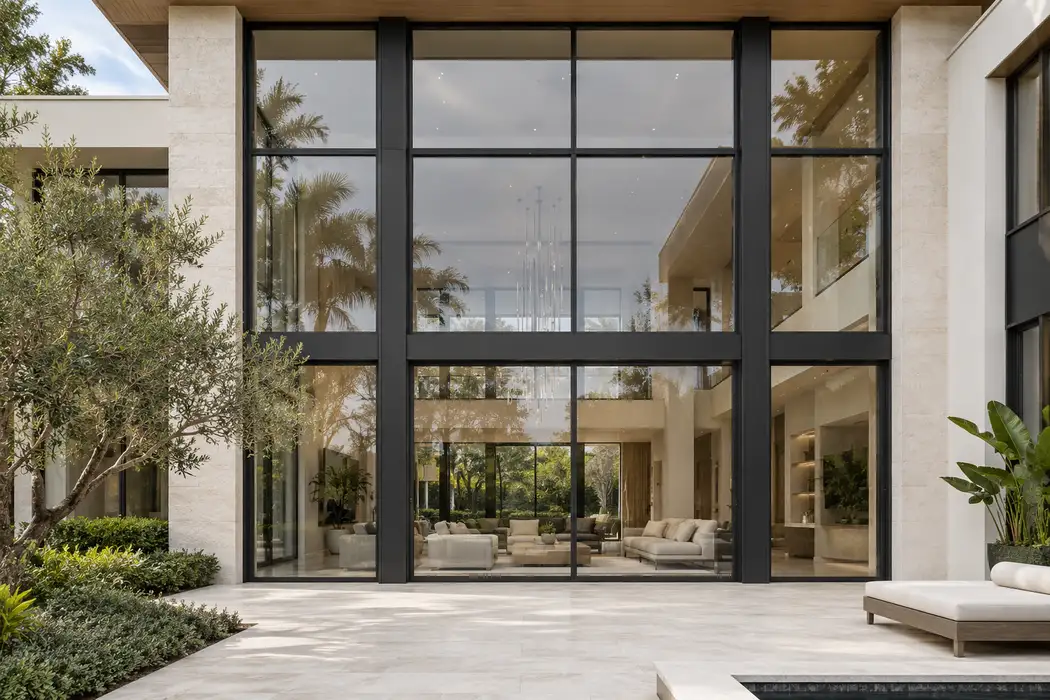
The approval number can be genuine while the proposed installation falls outside its scope. Common mismatches involve a different series, oversized glazing, unsupported combinations, or anchors intended for a different wall substrate.
Compare both pressure directions
Design pressure is commonly expressed in pounds per square foot, or psf. Positive pressure pushes toward the building; negative pressure pulls outward. Both matter.
For illustration, suppose an opening requires +55/-75 psf and a proposed configuration allows +65/-65 psf, using the same pressure basis. The positive rating is sufficient, but the negative rating is not. These numbers are an example, not a Florida-wide minimum.
Likewise, a marketing claim about a hurricane category or wind speed does not replace opening-specific pressure checks. Height, building shape, exposure, and location on the building influence loads.
Check the combined assembly
Two individually approved windows do not automatically make an approved combined opening. Mullions, connections, and their load limits need appropriate coverage. A larger architectural window may require a different glass package, reinforcement, or layout.
When exploring custom aluminum windows, we recommend reviewing appearance and approval scope together. A beautiful elevation is easier to deliver when its panel divisions are resolved early.
Ask your designer to compare loads and ratings on the same basis. Ultimate wind-load values and allowable-stress design pressures should not be mixed without the appropriate conversion. Also check whether the quoted pressure applies to your particular size, glass option, and anchor arrangement, rather than assuming the highest number on a product brochure applies to every unit.
What to Request Before a Deposit—and Keep for Inspection
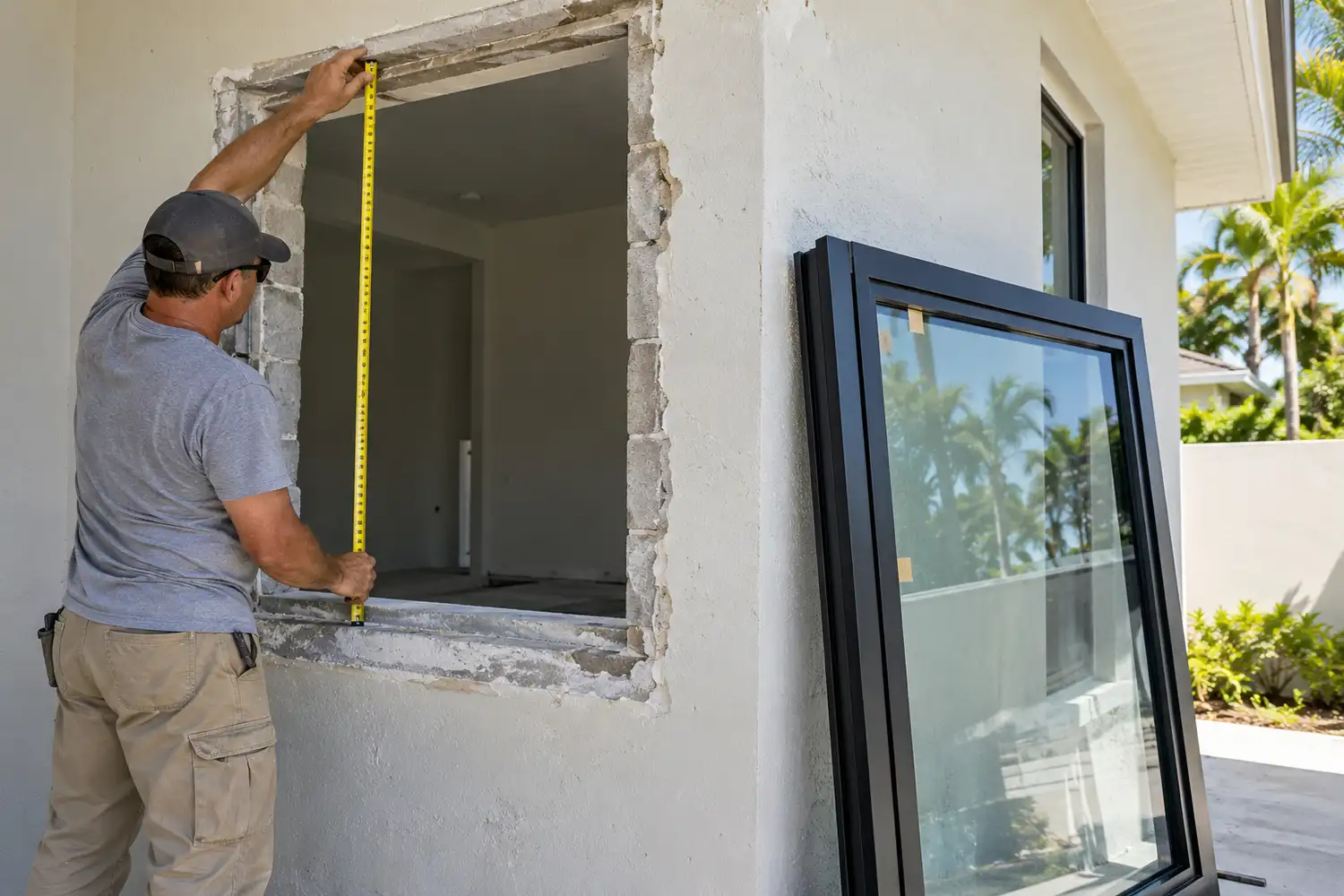
Use these checkpoints to keep the paperwork connected to the physical windows:
- At quotation: obtain the exact series, dimensions, glazing choices, full approval references, and installation drawings.
- Before ordering: have your local project team confirm the required pressures, approval limits, substrates, and protection approach.
- At delivery: compare product identification and supplied components with the approved order.
- During installation: follow the selected approved details, including anchorage and attachment conditions.
- For inspection: retain the complete approval documents, selected options, window schedule, and permit records.
Miami-Dade’s replacement-window checklist asks for opening sizes, product approval numbers, and current approval documentation. It also calls for identifying mullions when used.
For imported windows, complete these checks before production and shipment. A test report from overseas can support evaluation, but it is not automatically a Florida product approval. Resolving documentation early avoids a difficult conversation after the windows arrive.
Hurricane Impact Window FAQs
Can an FL-approved window be used in Miami-Dade or Broward?
Yes, when the specific approval supports HVHZ use and the actual configuration meets the project’s requirements. An FL number without HVHZ coverage is insufficient there.
Does an NOA always mean impact resistance?
No. Read the Missile Impact Rating and protection limitations. Non-impact products can also have NOAs.
Do I need both an NOA and an FL number?
Not universally. Verify the applicable approval pathway and its conditions for the proposed product and project.
Are custom sizes covered automatically?
No. The proposed dimensions, glazing, configuration, and installation must fit the supported approval scope, or follow an applicable project-specific approval process.
Do ASTM test reports replace product approval?
No. Testing establishes performance evidence; Florida approval and project compliance require the applicable evaluation and documentation.
Are impact windows hurricane-proof?
No product guarantees protection under every storm condition. Impact glazing can crack; the system is evaluated against defined impact and pressure criteria.
Official resources and technical references
- Florida Statutes §553.842: Product evaluation and approval
- Florida Statutes §553.8425: Local product approval
- Florida Building Commission: Product Approval Search
- Miami-Dade: Product Approval
- Miami-Dade: Windows, Shutters, Doors and Security Bars
- ASTM E1886: Impact and cyclic-pressure test method
- ASTM E1996: Hurricane debris-impact specification
- Intertek: Hurricane Testing Goes Beyond Wind Pressure