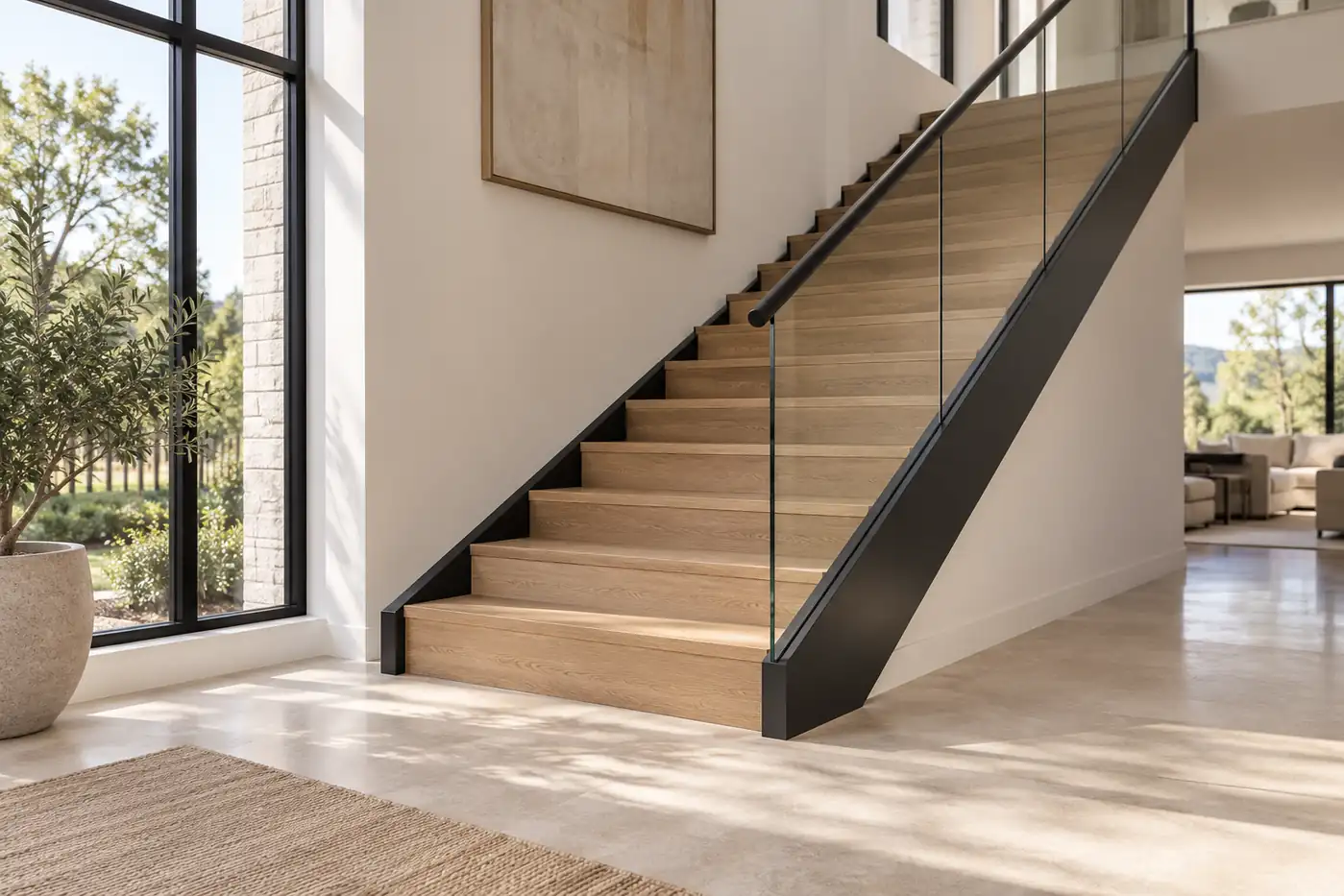

















Which Stair Tread Material Lasts Longest?
There is no dependable universal ranking of concrete, steel, marble and oak. A well-supported wood tread can remain serviceable through repeated refinishing; a poorly detailed concrete step can develop problems much sooner.
Separate structural life from surface appearance. A scratched coating may need attention while the tread underneath remains sound. Conversely, a flawless-looking surface tells you little about hidden supports.
We use this comparison to start the conversation:
| Material | Main wear concerns | Possible repair route |
|---|---|---|
| White oak | Finish wear, dents, moisture movement | Recoat or refinish suitable construction |
| Marble | Etching, scratches, chipped edges | Professional honing, polishing or repair |
| Steel | Coating damage, corrosion, worn grip surfaces | Repair protection and replace wear components |
| Concrete | Cracking, edge damage, staining | Assess cause, then repair or renew finish |
Repairability matters because replacing one tread should not become an unexpected staircase rebuild.
How the Four Materials Age in a Real Home
White Oak: Warmth With a Repairable Surface
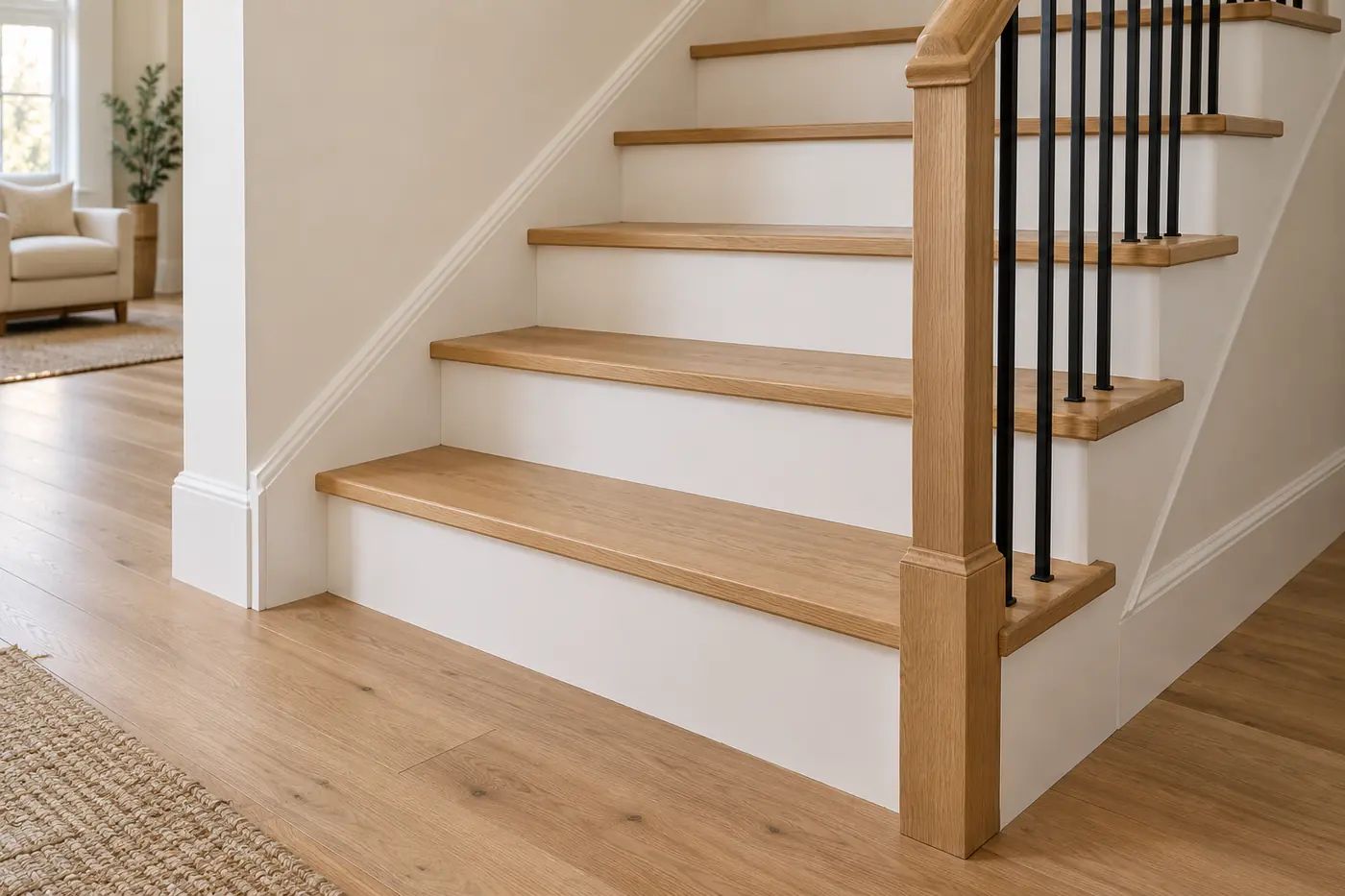
White oak works beautifully when you want the staircase to connect with wood flooring and a softer interior palette. It feels warmer underfoot than stone or metal and suits both traditional stairs and contemporary floating designs.
Its weak point is usually visible wear: grit can scratch a finish, heavy impacts can leave dents, and moisture changes can affect the wood. Keep dirt off the walking surface and follow the finish supplier’s cleaning instructions.
Do not assume every oak tread needs oil every one or two years. Rubio Monocoat’s Oil Plus 2C guidance, for example, recommends a maintenance coat averaging three to five years, sooner with heavy traffic. That is product-specific guidance, not a schedule for every staircase. Polyurethane and other film finishes need their own care system.
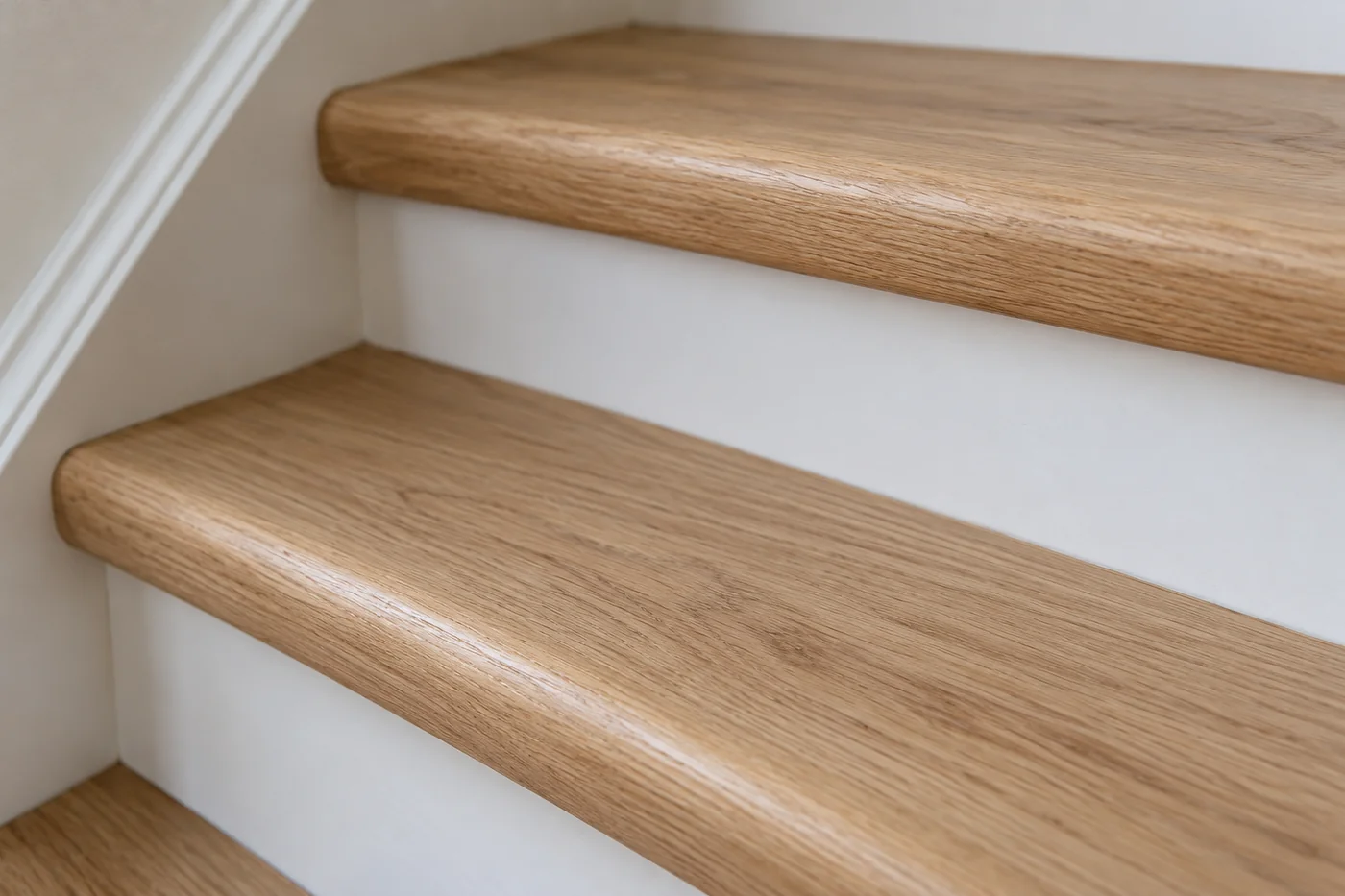
Ask whether you are buying solid wood, laminated solid wood, veneer over a core, or a hollow wrap. The usable wood thickness determines refinishing options; a substantial-looking front edge does not prove the entire tread is solid.
Before approving the color, place the sample next to your flooring in daylight and evening light. We suggest deciding whether you want a close match or a deliberate contrast. Similar woods with slightly different undertones can look less coordinated than two clearly different finishes.
Marble: Lasting Character, More Demanding Care
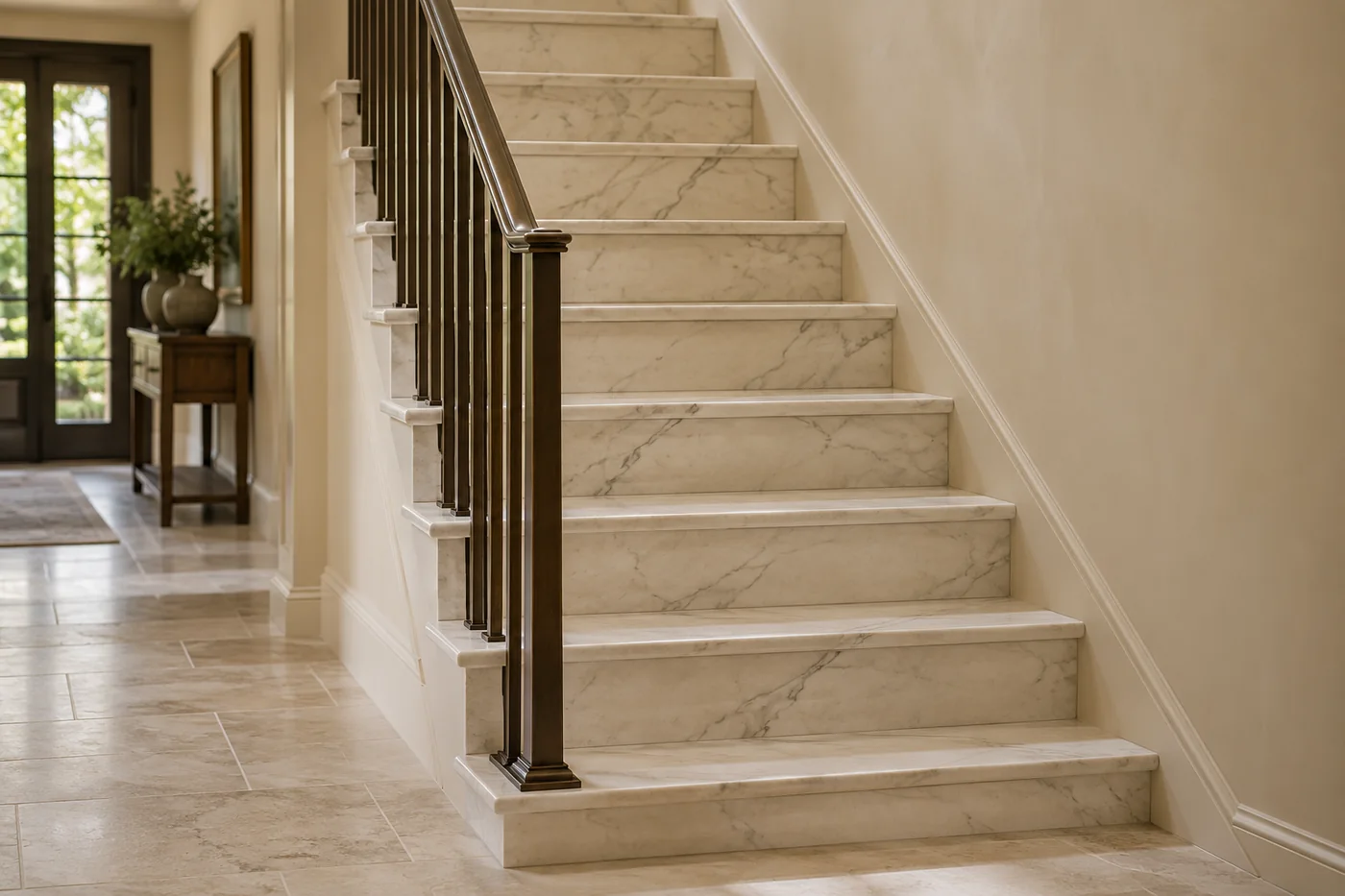
Marble brings natural variation that manufactured surfaces struggle to reproduce. It can be a lovely choice for a formal entry, especially when its veining connects with nearby flooring.
But marble is not a carefree surface. The Natural Stone Institute explains that grit can damage stone and acidic cleaners can etch calcium-carbonate-based materials. Use suitable neutral cleaners and address spills promptly.
Impregnating sealers can improve stain resistance; they do not make stone stain-proof or establish slip resistance. Ask a stone specialist about the particular marble, finish and care products.
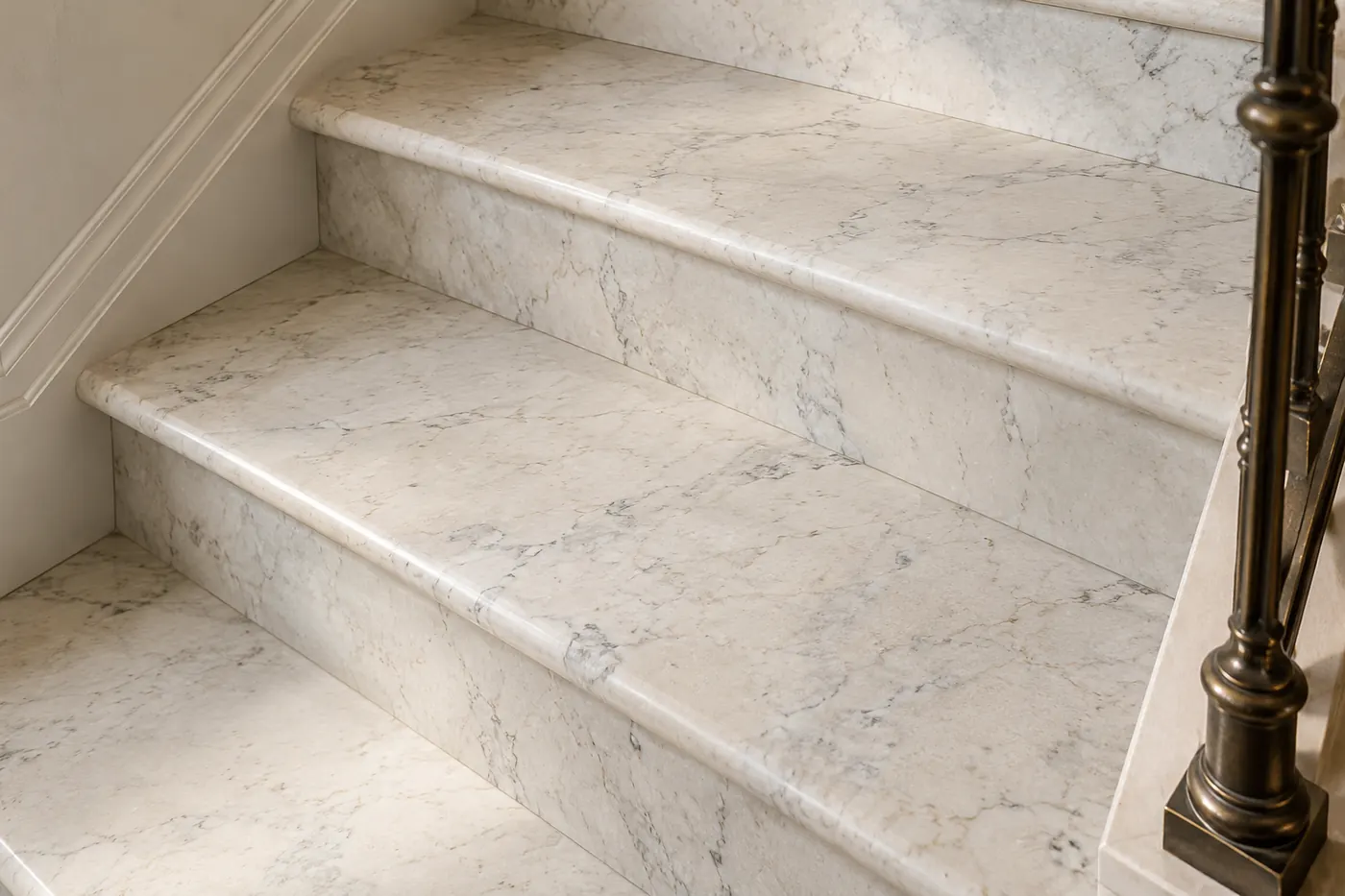
Honed marble gives a quieter, less reflective appearance than polished marble. Neither finish name alone establishes safe traction. Review the actual supplied surface and consider edge repairs, which may remain visible even after professional work.
Steel: Strength Depends on More Than the Plate
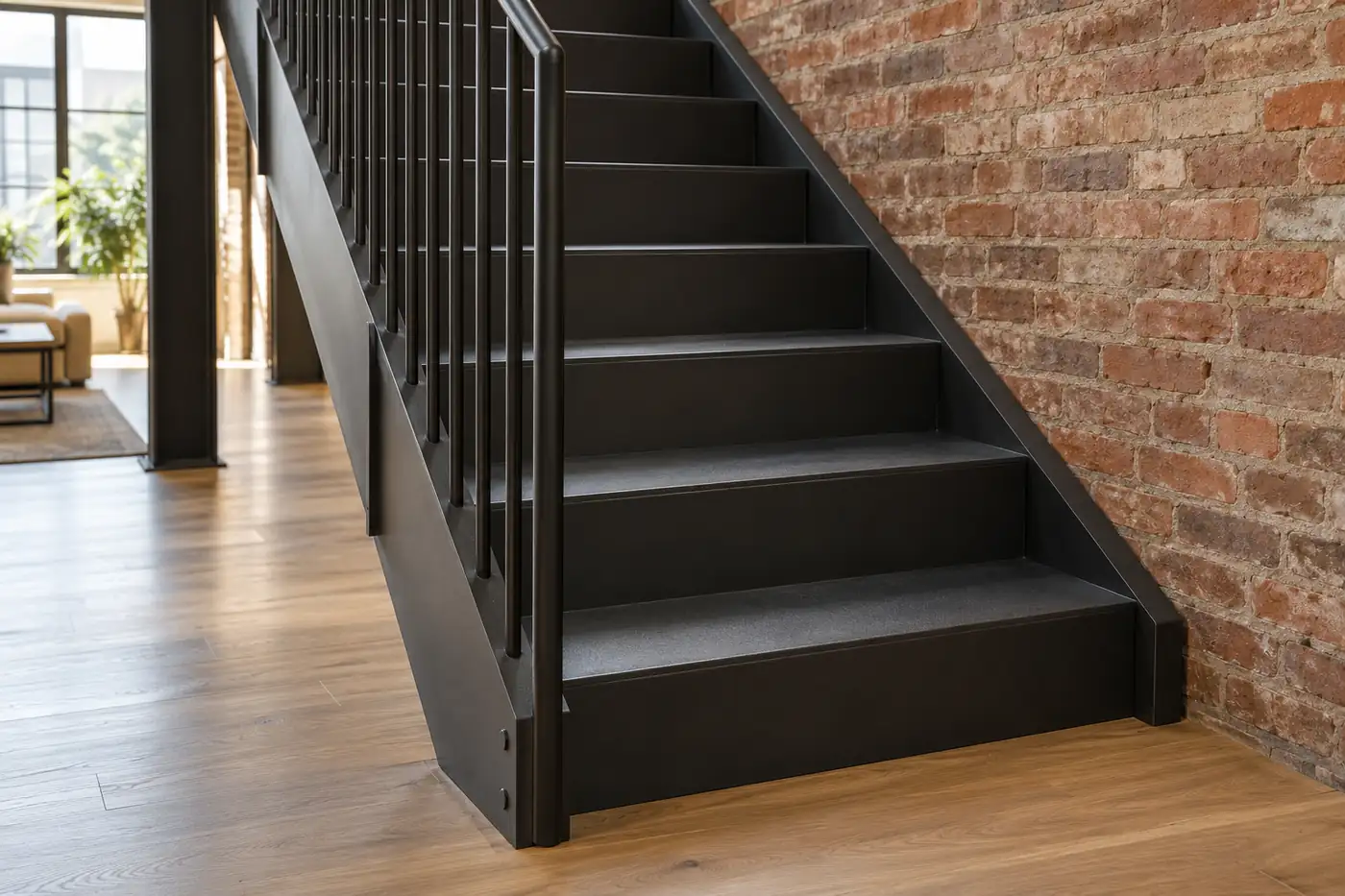
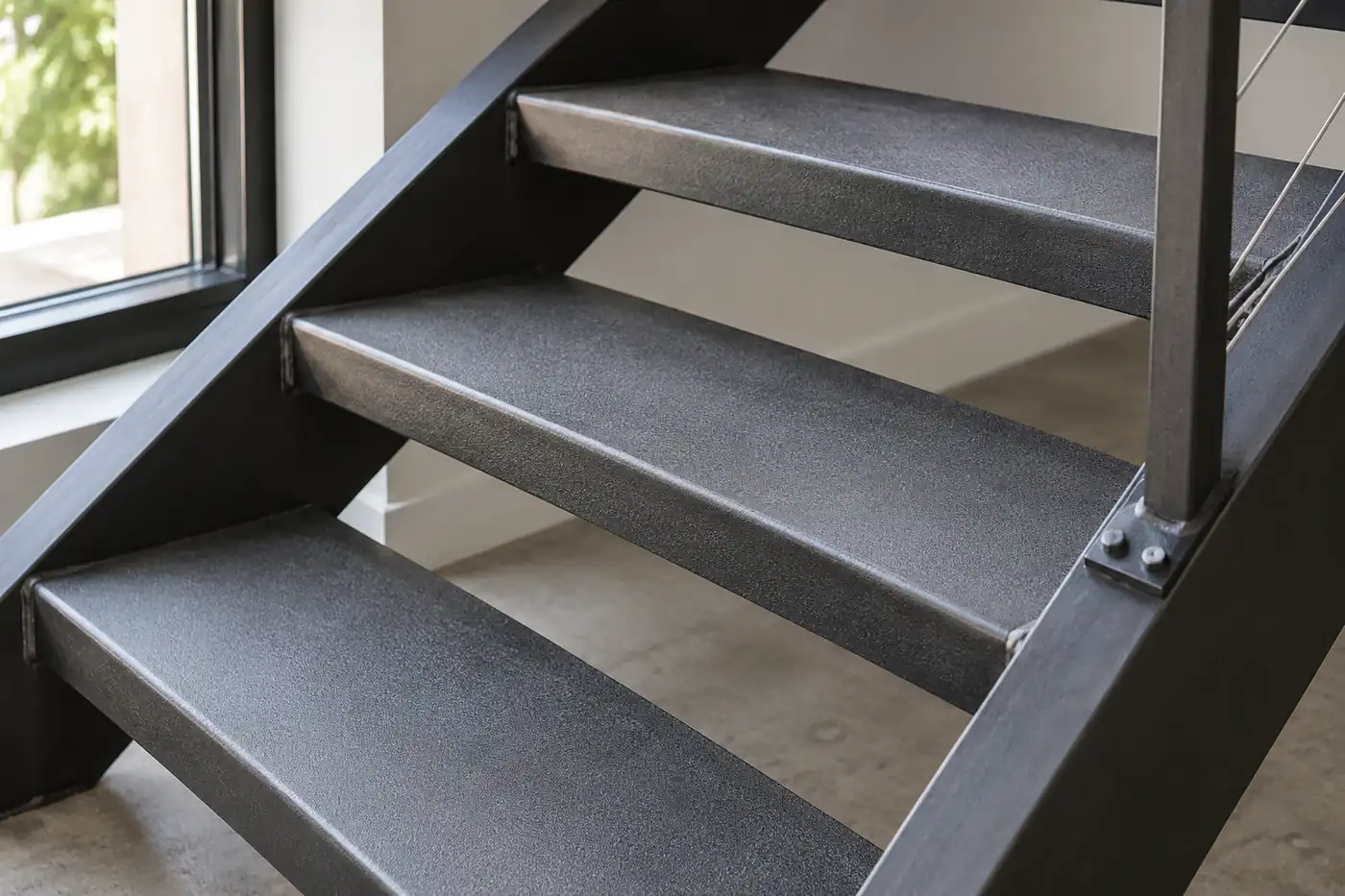
Steel suits industrial interiors and crisp architectural details. However, “steel tread” can mean a flat plate, folded section, perforated surface or a framed assembly. Those constructions behave differently.
Ask about stiffness, vibration, footfall noise and the replaceability of grip strips. A coating that looks excellent on a railing is not automatically suitable for repeated shoe traffic.
Ordinary carbon steel can corrode when exposed. The American Galvanizers Association explains why protective coatings matter in exposed environments. For interior stairs, specify the finish, touch-up process and protection of vulnerable details rather than accepting “rustproof” as a complete specification.
Concrete: Solid Presence, Careful Planning
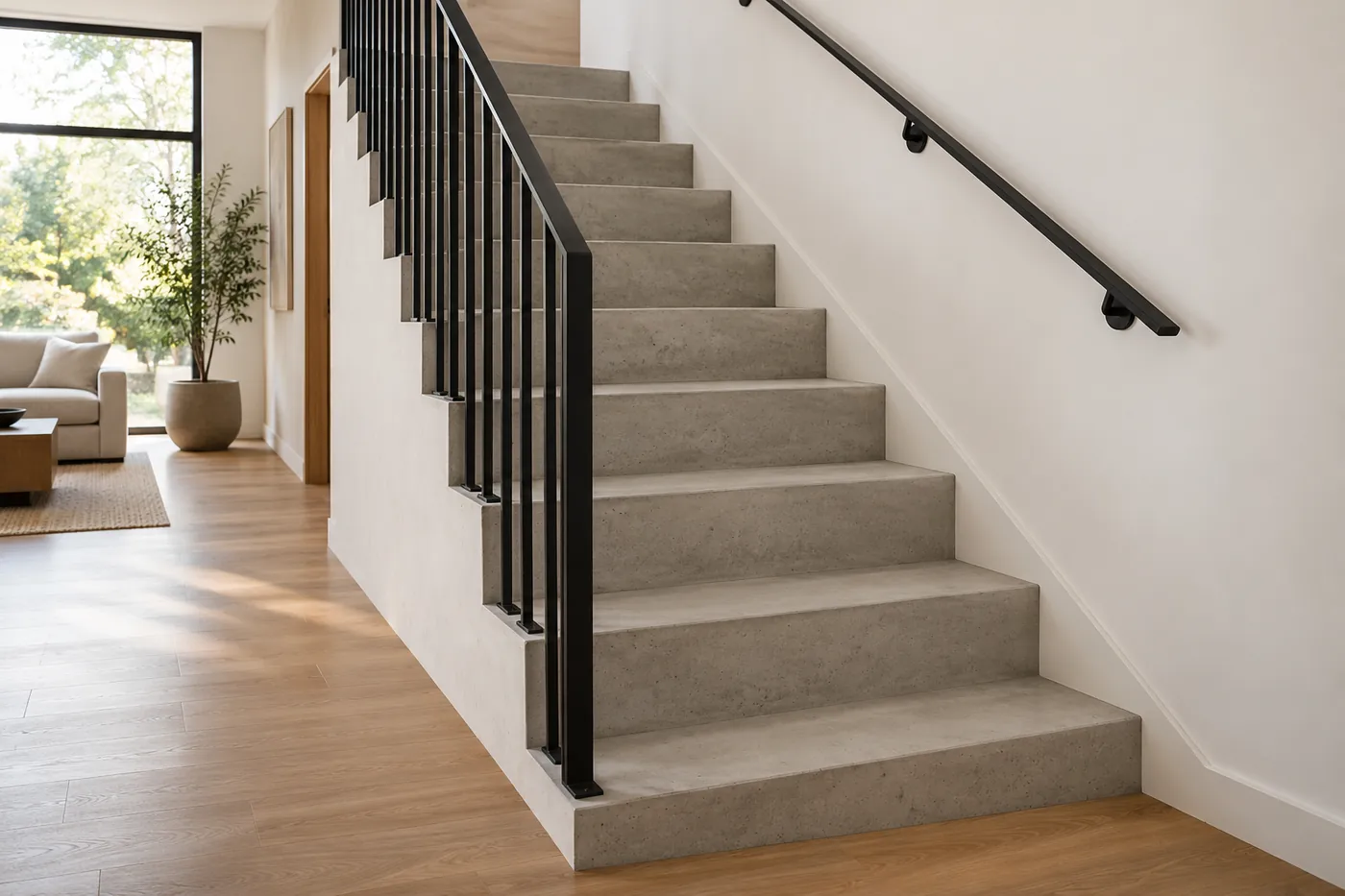
Concrete creates a calm, substantial staircase that fits minimalist homes. First establish what the proposal includes: cast-in-place construction, precast treads, or a concrete-look finish over another structure.
Weight, reinforcement, support and site access belong in the early design conversation. Concrete also needs realistic expectations. NRMCA’s cracking guidance explains that completely crack-free concrete cannot be guaranteed and that construction and curing affect crack control.
A visible crack needs assessment of its cause, not an automatic cosmetic patch. Sealed surfaces and repaired areas may also develop a different appearance over time.
Grip, Noise and Comfort: The Everyday Test
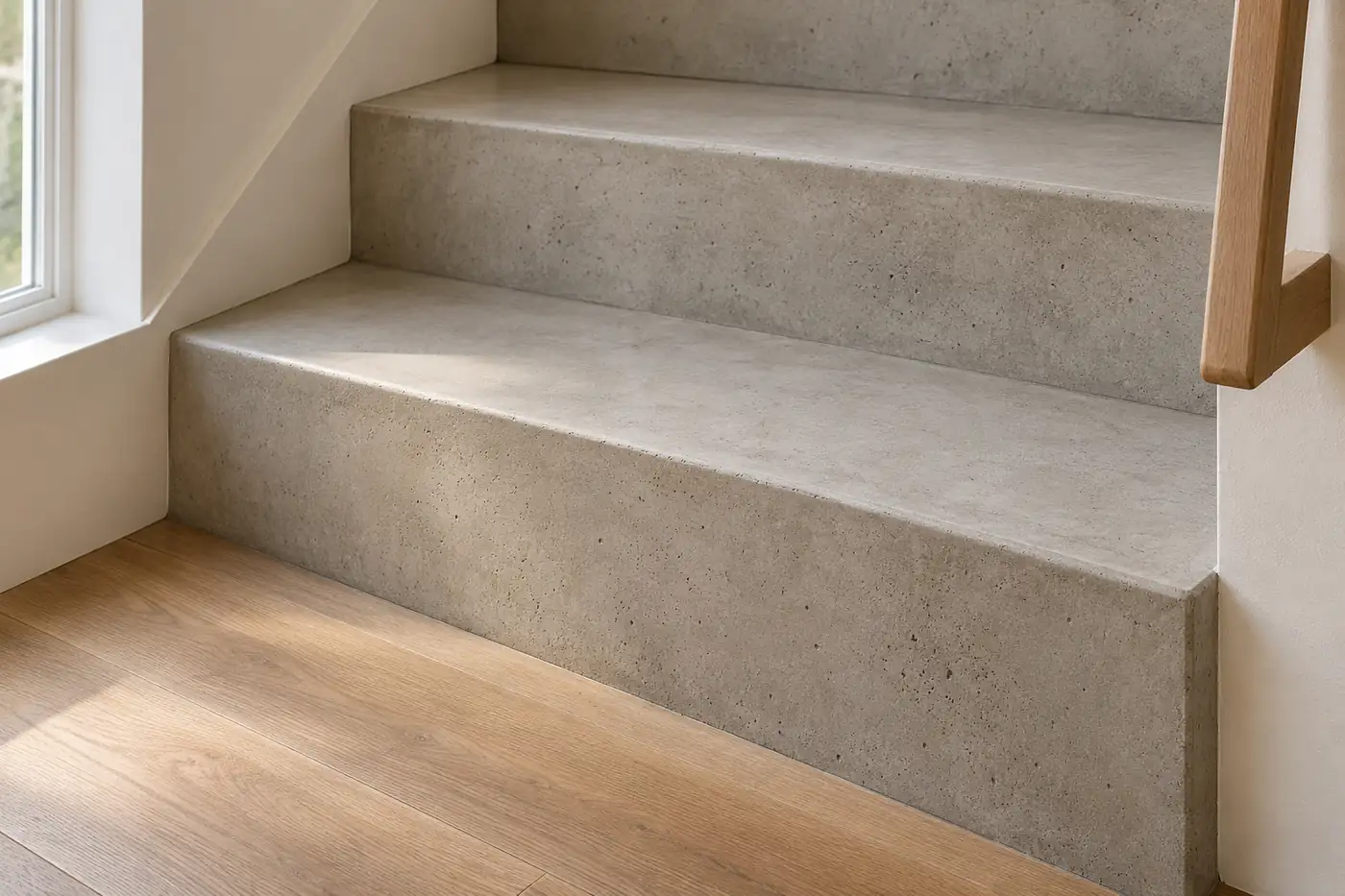
Bring your household into the decision. Do you usually wear socks indoors? Are pets using the stairs? Will wet shoes reach the first flight? A material sample cannot reproduce every condition, but it can expose an uncomfortable texture or an unsuitable finish before you order.
Consider front-edge visibility, lighting, secure handrails and consistent step geometry alongside traction. No tread material makes the complete staircase safe by itself.
For acoustic comfort, ask how the whole assembly controls movement and impact noise. Wood is not automatically silent, and every steel staircase does not necessarily ring.
What do R9–R11 ratings mean? They are classifications from specified slip-testing conditions, not a universal US residential stair approval. The Health and Safety Authority warns that R9, and sometimes R10, surfaces can be slippery when wet or greasy. Laboratory results may not reflect every real-world condition.
Request the test method, laboratory report and exact tested finish. Have your project professional confirm its relevance to the intended stair use. A supplier’s “R11” label alone does not settle the question.
If you plan to add a runner, discuss its attachment and edge details before ordering the treads. Avoid loose coverings that shift underfoot. Also ask how any traction treatment should be cleaned and renewed: its maintenance requirements belong in your decision alongside its initial appearance.
Tread Thickness Starts With the Structure
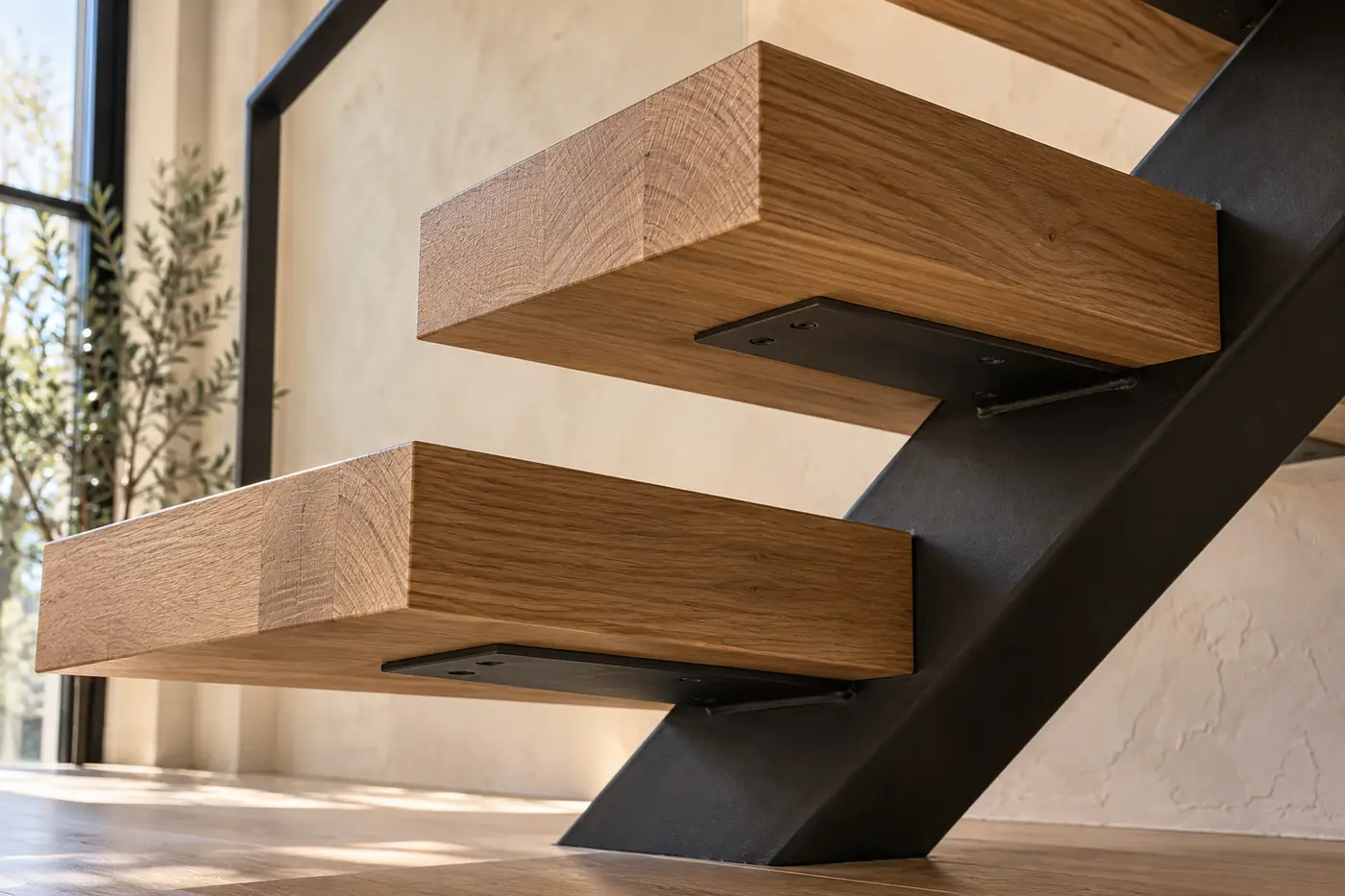
A tread laid over continuous support is a different structural problem from one spanning between stringers or cantilevering from a wall. That is why we would not use 1½ inches as a universal minimum for every solid-wood tread.
Thickness must be coordinated with span, material properties, loading, connections and the approved stair design. Stone used as cladding must not be mistaken for a self-supporting stone tread. With steel, folds and stiffeners matter alongside plate thickness.
Request a section drawing that identifies the actual load-bearing construction. Your local design professional should review it against the code adopted for your project.
For renovations, check finished floor and tread levels before changing materials. Added thickness can affect the first or last riser and the consistency of the flight.
Compare Installed Cost and Future Repairs
A price per tread is useful only when the scope is clear. Compare fabrication, finishing, supports, freight, site handling and installation on the same basis.
Heavy stone or concrete may add handling and structural requirements. An existing staircase can also need preparation that a new-build quotation leaves out. For concrete, compare local construction with imported precast components using the complete installed scope.
Then ask one practical question: If a tread is damaged in five years, how will we repair or replace it? Discuss finish availability, spare pieces, access to fixings and natural color variation. The cheapest initial quote can become inconvenient if one damaged component is difficult to replace.
Ask each bidder to list exclusions in writing, including removal of old finishes, repairs to the existing supports, delivery access and disposal. Keep a separate allowance for conditions that cannot be confirmed until the old stair covering is removed. This makes competing proposals much easier to compare.
Which Material Fits Your Home?
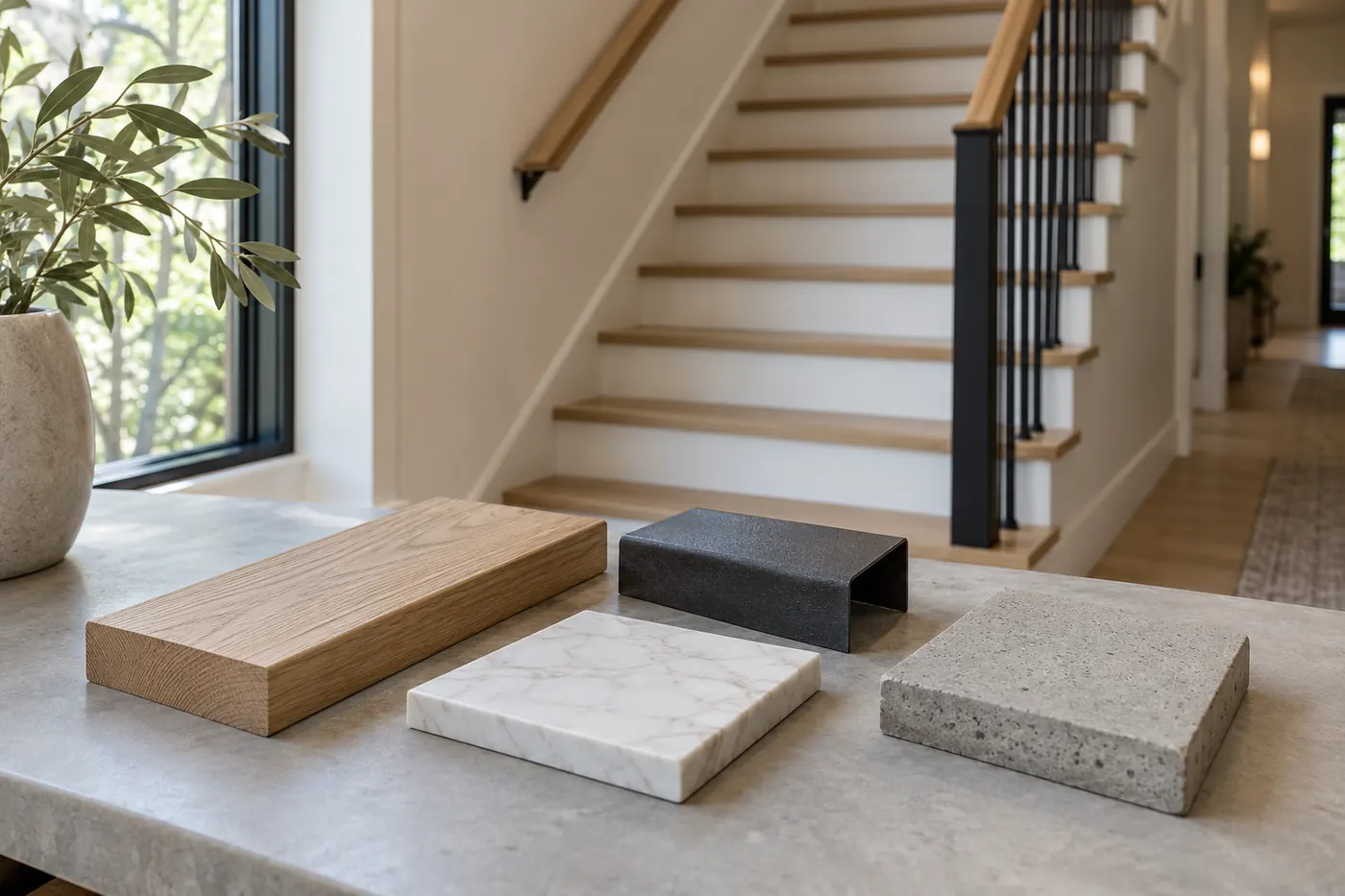
Use your priorities to create a shortlist, then review the actual construction and finish:
| Your priority | Start by considering | Confirm before ordering |
|---|---|---|
| Warmth and coordination with wood floors | White oak | Finish, color variation, refinishing options |
| Natural stone and a formal entrance | Marble | Traction, cleaning, support and edge repair |
| Industrial character and crisp metal details | Steel | Stiffness, noise and protective finish |
| A substantial minimalist new build | Concrete | Weight, construction and appearance expectations |
| Replacing an existing stair finish | Assess the existing structure first | Support capacity and finished riser heights |
For children, older family members or pets, evaluate the surface and complete stair design before choosing by appearance.
Before Ordering Custom Treads From China
We recommend agreeing these details before production:
- Material: species or stone selection, grade, actual construction and approved sample.
- Drawings: dimensions, finished floor levels, supports, connections and installation sequence.
- Surface: coating or treatment, relevant test reports and cleaning instructions.
- Delivery: component weights, protective packaging, stair-position numbering and access for unloading.
- Aftercare: touch-up materials, replacement availability and realistic repair expectations.
Your locally appointed contractor handles installation, with structural review and permits coordinated by the appropriate local professionals. We can support material selection, shop drawings and installation guidance so those responsibilities are clear before the order moves forward.
For natural materials, approve the acceptable range rather than expecting every tread to look identical. Ask how adjacent pieces will be selected and numbered. Keep the approved sample and finish identification with your project records; they are useful when discussing a future repair.